 CattleScale
How much weight do cattle lose in transport?
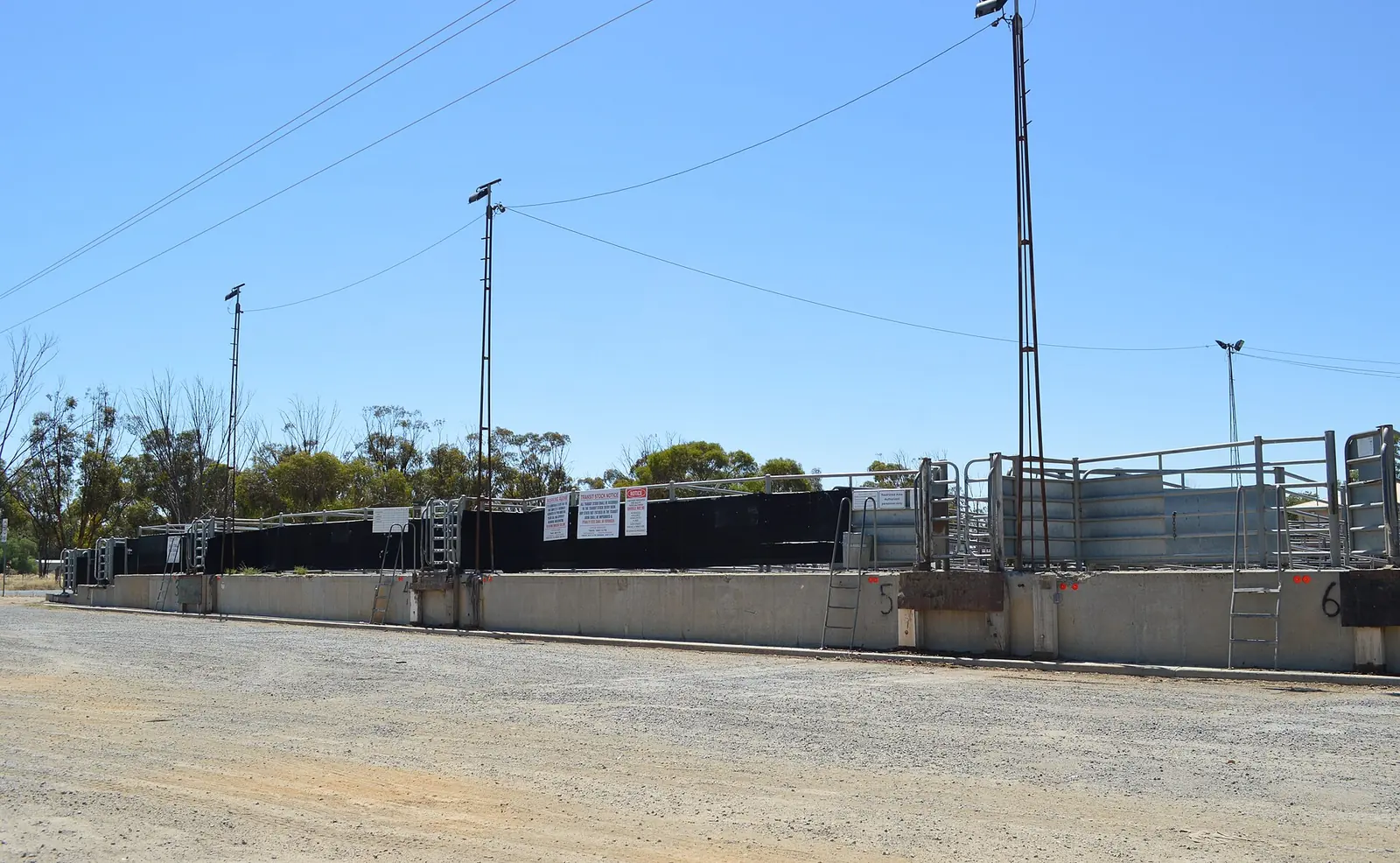
A beast can leave the paddock at one weight and arrive lighter, before it has grown or shrunk a kilogram of muscle. Here is what published research and extension guides say about that loss, what drives it, and how long it takes to come back.
What is cattle shrink?
Shrink is the liveweight cattle lose when they are off feed and water, yarded, or trucked. Mississippi State University Extension describes it as a normal part of marketing and transport, and notes that the same word is sometimes used for weight lost from a carcase (Parish and Rhinehart 2023). This article is about the live animal.
Liveweight includes the gut and the bladder, not just muscle and fat. FutureBeef says a change in gut fill has the greatest influence, and that in adult cattle gut fill can be 12 to 25 per cent of liveweight (FutureBeef 2011, reviewed 2026).
How much weight do cattle lose off feed?
A 2026 systematic review pooled 26 studies and fitted one equation. Body weight loss, in kilograms, was about minus 9.2715, plus 0.0808 times the weight at the start of deprivation, plus 0.3642 times the hours off feed and water (Parker 2026). Start weight and time off feed and water were the significant predictors. Together they accounted for 75 per cent of the variation in loss between studies. The equation was built on animals from 146 to 530 kg, and on deprivation times from 0 to 65 hours. Outside that range it is an extrapolation, not a measurement.
FutureBeef prints the same equation and a rounded table (FutureBeef 2011, reviewed 2026). Two rows that sit inside the studied range:
- A 200 kg animal off feed and water for 12 hours: about 11 kg.
- A 400 kg animal off feed and water for 24 hours: about 32 kg.
Parker says further work validating the equation with cattle undergoing transportation may be required to improve the rate of adoption (Parker 2026). Use it to plan a curfew or a quote, then weigh.
In the first 24 hours, dung and urine are the main source of the loss (Parker 2026). Mississippi State puts rough shares on that idea: about 65 per cent faeces, about 28 per cent urine, and about 7 per cent from somewhere else, likely fluid from body tissue, which takes longer to put back than gut fill (Parish and Rhinehart 2023).
Does the truck itself add more loss?
In Parker's single-factor screen, transport versus no transport was not a significant modifier (P = 0.3744). That figure is from the screening step, not the final model. Transport was excluded from the final model, which kept start weight and time off feed and water (Parker 2026). FutureBeef says much of the loss can happen in the yards before the truck leaves (FutureBeef 2011, reviewed 2026; Parker 2026).
A table from the Alabama Cooperative Extension System pocket guide ANR-1323, reprinted by Mississippi State University Extension, shows a higher percentage on a moving truck than in a dry lot stand: 5.5 per cent versus 3.3 per cent at 8 hours, 7.9 versus 6.2 at 16 hours, and 8.9 versus 6.6 at 24 hours (Parish and Rhinehart 2023). That publication says shipping and handling together beat holding cattle off feed and water alone, and that transit can be up to two thirds of the combined loss in beef steers.
A North American study of 6,152 journeys of at least 400 km found feeder cattle shrank more than fat cattle: 7.9 per cent of body weight versus 4.9 per cent (plus or minus 0.2 percentage points). The feeders were also on the truck longer, 14.9 hours against 12.4. Shrink rose with temperature and with time, and rose fastest when the trip was both long and hot (Gonzalez et al. 2012). That is not an Australian saleyard trial. Use it as a range.
What do US yard sheets usually allow?
Mississippi State says feeder calf shrink commonly falls between 2 and 8 per cent of liveweight. Cattle it followed from Mississippi to Kansas, at least 14 hours on the road, lost 5.59 to 8.71 per cent as pen averages. Slaughter steers in that guide often fall between 2 and 6 per cent. Pencil shrink, a 2 to 4 per cent deduction in some US contracts, is an estimated shrink used in many of those transactions (Parish and Rhinehart 2023). It is not an Australian rule. That last clause is our framing, not a statement in the Mississippi guide. Write the weighing conditions into the agreement instead: full or curfewed, on farm or at the feedlot (Parish and Rhinehart 2023).
How long until the weight comes back?
FutureBeef says cattle need 3 to 21 days to recover the weight they started with, usually 10 to 21 days, in a feedlot or on pasture. Total time off feed and water through the whole sale matters more than any one spell in the middle (FutureBeef 2011, reviewed 2026). Mississippi State says at least 3 days, typically a week or less, and up to 30 days in a severe case (Parish and Rhinehart 2023). Those are two published ranges, not one promise.
What is the legal limit on time off water?
The Australian land transport standards set maximum times off water. They are welfare limits, not a target for shrink. Meat & Livestock Australia's fit to load guide reproduces them and says the clock includes mustering and any time off water in the yards, not just the hours on the truck (Meat & Livestock Australia 2019):
- Cattle over 6 months old: 48 hours, then a 36 hour spell with feed, water and room to lie down before another journey.
- Calves from 30 days to 6 months, lactating cows with a calf at foot, and cows more than 6 months pregnant (except the last 4 weeks): 24 hours, then a 12 hour spell.
- Calves 5 to 30 days old travelling without their mothers: 18 hours off water, and a journey of no more than 12 hours.
The last 4 weeks of pregnancy are left out of that 24 hour class because the fitness to load rules are stricter. The Queensland code of the national land transport standards says livestock are not fit for the intended journey if they are heavily pregnant. For cattle known or visually assessed to be more than 37 weeks pregnant, the maximum time off water is 4 hours, then a 24 hour spell (Business Queensland 2014). The MLA guide's own note is that industry best practice is to transport animals in the last 2 to 4 weeks of gestation only under veterinary advice (Meat & Livestock Australia 2019).
The guide says these are maximums. Hot weather, poor condition and a long trip can mean an animal needs water sooner. Keep feed and water available as close to loading as you safely can (FutureBeef 2011, reviewed 2026; Parker 2026). The same fill also distorts a growth rate, which is covered in cattle average daily gain.
Where does CattleScale fit?
CattleScale gives an estimated weight from a photograph, with a range around that estimate. An optional printed ruler sheet in the photo can make the reading sharper. It is an estimate, not a weigh scale. A photo will not tell you how many kilograms a curfew took off, and it is the wrong tool for a sale by weight or a drench dose. It can help you roughly sort a mob before they walk up the ramp. The number you settle on should come from scales, under conditions you and the buyer both understand.
Frequently asked questions
How much weight do cattle lose in transport?
It tracks hours off feed and water, and how heavy the animal was at the start. A published equation puts a 400 kg beast at about 32 kg down after 24 hours off feed and water (FutureBeef 2011, reviewed 2026; Parker 2026). North American feeder cattle on long hauls averaged 7.9 per cent (Gonzalez et al. 2012). Your consignment can sit outside either figure.
Is shrink the same as losing condition?
No. Most of the early loss is gut fill, dung and urine. A smaller share is fluid from tissue, and that part is slower to replace (Parish and Rhinehart 2023; Parker 2026).
How long does it take cattle to regain shrink?
FutureBeef gives 3 to 21 days, usually 10 to 21, on feed or in a feedlot (FutureBeef 2011, reviewed 2026). A US extension guide says at least 3 days, typically a week or less, and up to 30 days in a severe case (Parish and Rhinehart 2023).
Does a longer trip always mean more shrink?
Time off feed and water matters more than distance. A lot of the loss can happen in the yards before the truck moves (FutureBeef 2011, reviewed 2026). A hot, long trip still adds risk: in one large study, shrink rose fastest when cattle were both a long time on the truck and in higher temperatures (Gonzalez et al. 2012).
References
- Business Queensland (2014) 'Land transport of livestock code', Business Queensland. Available at: https://www.business.qld.gov.au/industries/farms-fishing-forestry/agriculture/animal/health/welfare/codes/transport (Accessed: 10 October 2026).
- FutureBeef (2011, reviewed 2026) 'Liveweight loss and recovery in cattle', FutureBeef. Available at: https://futurebeef.com.au/resources/liveweight-loss-and-recovery-in-cattle/ (Accessed: 10 October 2026).
- Gonzalez, L.A., Schwartzkopf-Genswein, K.S., Bryan, M., Silasi, R. and Brown, F. (2012) 'Factors affecting body weight loss during commercial long haul transport of cattle in North America', Journal of Animal Science, 90(10), pp. 3630-3639. doi: 10.2527/jas.2011-4786 (Accessed: 10 October 2026).
- Meat & Livestock Australia (2019) Is the animal fit to load? A guide to the Australian Animal Welfare Standards for the Land Transport of Livestock. Sydney: Meat & Livestock Australia. Available at: https://animalwelfarestandards.net.au/wp-content/uploads/2023/08/MLA-Fit-to-load-guide-2019.pdf (Accessed: 10 October 2026).
- Parish, J.A. and Rhinehart, J.D. (2023) 'Understanding and managing cattle shrink', Publication 2577 (POD-12-23), Mississippi State University Extension. Available at: https://extension.msstate.edu/publications/understanding-and-managing-cattle-shrink (Accessed: 10 October 2026).
- Parker, E. (2026) 'Body weight and feed and water deprivation time predict cattle body weight loss from transportation', Animal Production Science, 66, AN26109. doi: 10.1071/AN26109 (Accessed: 10 October 2026).
This is general information, not advice for your herd or a particular animal. Check with your vet or adviser before you change feeding, treatment, joining or transport.