 CattleScale
What weight should a feeder steer be?
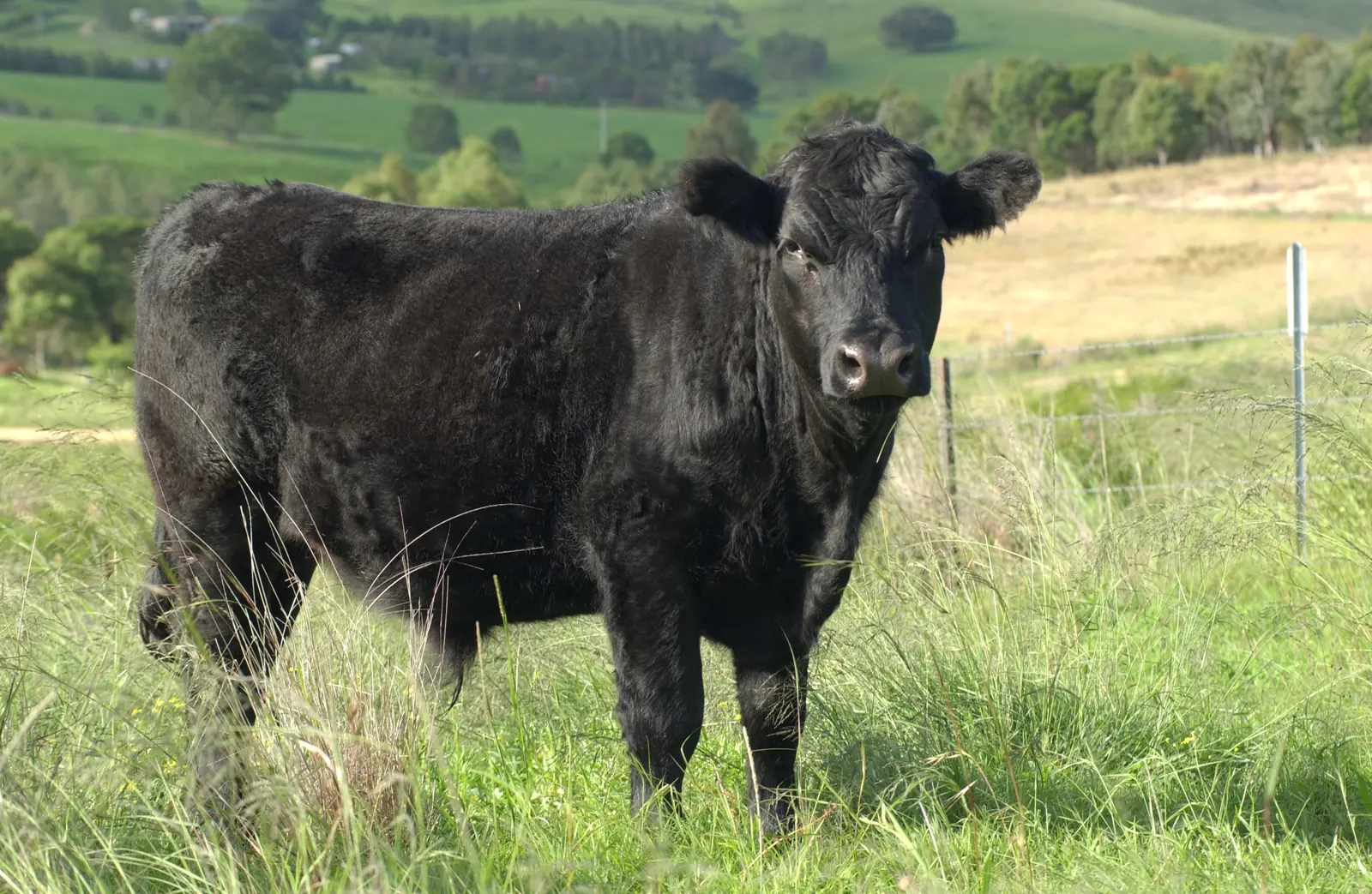
"What weight is a feeder steer?" sounds like it should have one answer. The published grids do not. A saleyard indicator, a 70 day trade steer and a long fed steer are three different animals, and the feedlot's own grid overrides all of them.
What does the feeder steer indicator actually measure?
The National Feeder Steer Indicator is a seven day rolling average of what feedlots pay, in cents per kilogram liveweight, for cattle that match a written specification. In the December 2024 National Livestock Reporting Service sheet, that specification has two rows. Yearling steers of 200 kg and over, with the feedlot prefix, any muscle score and any fat score. And grown steers from 0 to 600 kg, again with the feedlot prefix and no muscle or fat filter (Meat & Livestock Australia 2024).
MLA says these cattle may be backgrounded and then lot fed, or sent straight to a feedlot, depending on condition. The sheet reports a price. A 220 kg yearling and a 550 kg grown steer can both sit in the series. Neither figure is the feeder weight (Meat & Livestock Australia 2024).
What entry weights do the program tables use?
More Beef from Pastures publishes an example table for southern Australia and says, before the numbers, that owners should check with the customer because specifications change (Meat & Livestock Australia n.d.a). The empty entry weights in that table are:
| Program | Empty entry weight | Other gates on the same row |
|---|---|---|
| Trade, about 70 days | 250 to 350 kg | Steers and females, 0 adult teeth, muscle score D+, condition score 1 to 2, quiet, weaned and yard broken |
| Short fed, about 100 days | 440 to 480 kg | Steers, 0 to 2 adult teeth, frame score over 4.5, muscle score C+, condition score 1 to 2 |
| Mid fed, about 120 to 150 days | 420 to 480 kg | Steers, 0 to 2 adult teeth, frame score over 4.5, muscle score C+, condition score 1 to 2, HGP free in this example |
| Long fed, 220 days or more | 400 to 600 kg | Steers, 0 to 4 adult teeth, British breeds named in the table, frame score over 4.5, muscle score C+, condition score 1 to 2, HGP free in this example |
The same table gives liveweight equivalents at the end of the feeding period: 540 to 720 kg for the 100 day program, 550 to 750 kg after 150 days, 550 to 800 kg after 120 days, and 670 to 800 kg for the long fed program (Meat & Livestock Australia n.d.a). Those are exit bands, not the weight you should deliver. What a finished carcase is asked to weigh is a separate question, covered in what is a good slaughter weight for cattle.
"Empty" on the entry row matters. How much weight cattle drop off feed is in how much weight cattle lose in transport.
Condition score 1 to 2 in that table is the score the table itself prints. Australian condition scales are not all numbered the same way, so check which scale the feedlot means before you decide an animal is "too fat to enter". Frame and muscle, which the table also uses, are explained in frame score and muscle score.
Why do two MLA documents not match?
They are not trying to be the same list. The indicator is a wide price net, so a lot of cattle sold to feedlots are inside it. The program table is an example of what a particular feeding length has room to finish, starting from an empty weight and a tooth count. A third MLA document, on preparing feeder cattle, says the point directly: specifications vary from feedlot to feedlot, every feedlot has its own grid of premiums and deductions, and the weight figures in its summary table may vary, so check with the feedlot (Meat & Livestock Australia n.d.b). That guide's list of what grids usually include is worth keeping: age or teeth, breed, sex, individual weight, fatness, frame or hip height, structure, pregnancy, castration, vaccines, HGP status, how the cattle were weaned, the size of the line, an NLIS tag, and an LPA vendor declaration.
The same preparation guide says to sort cattle into 50 kg weight ranges, and not to remix groups in the four to six weeks before they go to the feedlot. The light end and the heavy end of a wide pen will not finish together.
How do you use this before you book a truck?
Ask the feeder buyer for the grid that will actually be applied: entry weight, whether that weight is full or empty, the tooth limit, the breed list, HGP, and the dollars off for a miss. Then weigh the cattle under the conditions the grid names. An indicator price tells you what a broad class sold for last week. It does not tell you whether your 390 kg steer is a 70 day trade steer or a light long fed steer. Days on feed, not the word "feeder", makes that call.
Growth rate is what turns an entry weight into an exit date. Calculating it from two scale weights is in cattle average daily gain.
Where does CattleScale fit?
CattleScale gives an estimated weight from a photograph, with a range around that estimate. An optional printed ruler sheet in the photo can make the reading sharper. It is an estimate, not a weigh scale. Feedlot grids are written in kilograms and teeth, and a miss is a price deduction. Do not book a load, or accept a grid, on a photo. The app can help you see which animals look outside the bunch before you bring the scales to the yards. The weight you put on the paperwork should be a scale weight, taken the way the buyer defined it.
Frequently asked questions
What weight should a feeder steer be?
It depends on the days on feed. An MLA example table gives empty entry weights of 250 to 350 kg for about 70 days, 440 to 480 kg for about 100 days, 420 to 480 kg for 120 to 150 days, and 400 to 600 kg for 220 days or more (Meat & Livestock Australia n.d.a). The feedlot's own grid can differ (Meat & Livestock Australia n.d.b).
Is the feeder steer indicator a target weight?
No. It is a price average. The December 2024 specification covers yearling steers of 200 kg and over, and grown steers from 0 to 600 kg, bought for feedlots, with no muscle or fat limit (Meat & Livestock Australia 2024).
Should feeder cattle be weighed full or empty?
The MLA program table labels its entry weights as empty (Meat & Livestock Australia n.d.a). Agree the curfew with the buyer before the cattle leave, because gut fill moves the reading.
How tight should the weight range be in one line?
MLA's feeder preparation guide says to sort into 50 kg ranges, and not to remix the groups in the four to six weeks before trucking (Meat & Livestock Australia n.d.b).
References
- Meat & Livestock Australia (2024) National cattle indicators. National Livestock Reporting Service, December 2024. Sydney: Meat & Livestock Australia. Available at: https://www.mla.com.au/contentassets/c515412afca74d64baadbd1d301e1750/job34771_nlrs-cattle-indicator-specifications_jan25.pdf (Accessed: 10 October 2026).
- Meat & Livestock Australia (n.d.a) 'Tool 7.01: Beef cattle market specifications', More Beef from Pastures. Available at: https://mbfp.mla.com.au/meeting-market-specifications/tools/tool-7.01beef-cattle-market-specifications (Accessed: 10 October 2026).
- Meat & Livestock Australia (n.d.b) Feeder cattle preparation. Sydney: Meat & Livestock Australia. Available at: https://www.mla.com.au/globalassets/mla-corporate/news-and-events/documents/mla-feedlot-feeder-cattle-prep-best-practice_v01.pdf (Accessed: 10 October 2026).
This is general information, not advice for your herd or a particular animal. Check with your vet or adviser before you change feeding, treatment, joining or transport.