 CattleScale
Cattle average daily gain: how to calculate and track weight gain
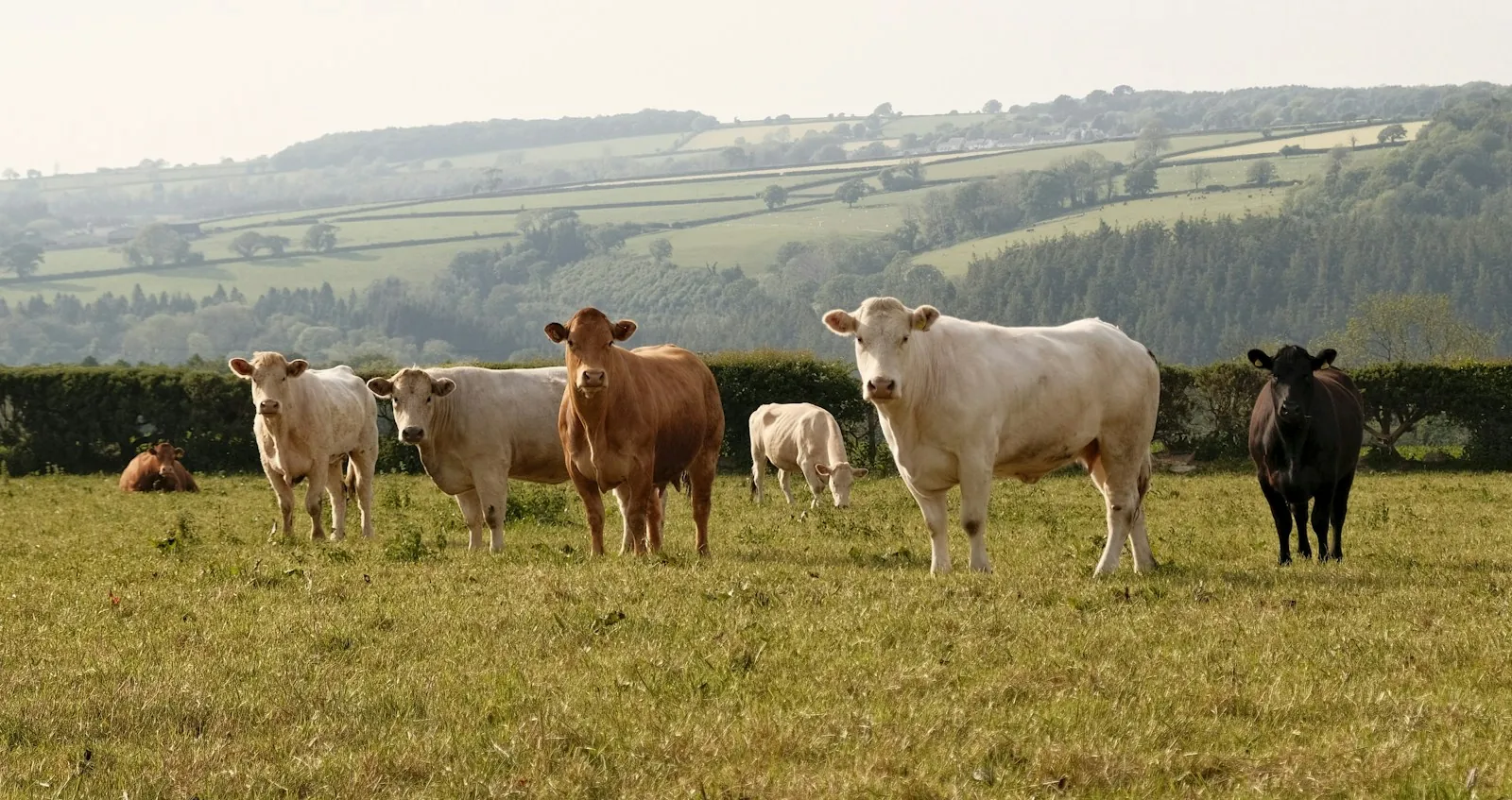
Average daily gain (ADG) is how many kilograms an animal puts on per day between two weighings. You calculate it by taking the weight change and dividing it by the number of days between the two weights. A steer that goes from 300 kg to 345 kg in 60 days has gained 0.75 kg a day, and the figure is only as good as the two scale weights behind it.
What is average daily gain in cattle?
Average daily gain is the average weight an animal gains each day over a set period (Mikesell 2025). It turns two scale readings into a rate you can compare with a target, another mob or the cost of the feed. Liveweight is a major determinant of price in the Australian commercial beef industry (BREEDPLAN n.d.); more in why knowing your cattle's liveweight matters.
How do you calculate average daily gain in cattle?
ADG (kg/day) = (second weight minus first weight) ÷ number of days between weighings
Penn State Extension adds a planning formula: days to market equals the gain still needed divided by ADG (Mikesell 2025).
Worked example (illustrative numbers)
These are round numbers chosen to show the arithmetic. They are not research results.
- A weaner steer weighs 300 kg on 1 March.
- It weighs 345 kg on 30 April, 60 days later.
- Gain: 345 minus 300 = 45 kg.
- ADG: 45 ÷ 60 = 0.75 kg a day.
If the target sale weight is 450 kg, the steer still needs 105 kg. At 0.75 kg a day that is 105 ÷ 0.75 = 140 more days, assuming the rate holds. Pasture changes with the season, so recheck the projection at each weighing.
Why do weighing conditions matter so much?
A scale weighs feed and water in the gut too. FutureBeef notes that change in gut fill "has the greatest influence on liveweight", and that in adult cattle gut fill can make up 12 to 25 per cent of liveweight (Wythes 2011). Fill rises as feed quality and palatability fall, and cattle on pasture carry more gut fill than cattle on grain (Wythes 2011).
The NSW Department of Primary Industries gives an example of a 400 kg steer weighed full, straight off feed, that "could have lost about 5% of his liveweight in gutfill" overnight and weigh only 380 kg the next day. Its advice is that "it is best to use the same timing whenever you weigh cattle", such as two hours off feed (McKiernan, Gaden and Sundstrom 2007).
Now apply that to the worked example. Suppose the first weight was taken after an overnight curfew and the second straight off green feed, with about 5 per cent more fill (illustrative). The second weight reads roughly 362 kg instead of 345 kg. ADG jumps from 0.75 to about 1.03 kg a day, and nothing about the steer changed. Over a 14 day gap, the same 17 kg would look like 1.2 kg a day of extra gain.
Curfew or full weights?
A curfew weight is taken after an overnight fast from feed and water. A recent Australian study in grazing lambs concluded that when ADG data is needed, curfew weight "should be used to minimise the error associated with gut fill", and that full weights need at least 28 days between weighings (Clayton et al. 2026). That was sheep, but the gut fill problem is the same. On farm, the rule is consistency: same time of day, same time off feed, every weighing.
Use the same scales, and check them
Scale accuracy drifts, and different sets of scales disagree. Advice for BREEDPLAN recorders is to calibrate regularly with known weights, recalibrate after moving scales, clean under the load bars, and weigh a whole mob on one set of scales (Beef Central 2023).
How often should you weigh cattle to track gain?
Often enough to act, far enough apart to measure. Research on testing beef bulls found a 70 day test was needed to measure growth rate with acceptable precision when weighed fortnightly; automatic weighing cut that to 56 days (Kearney et al. 2004). Penn State Extension's growth rate guide advises collecting routine weights every two weeks, warning that weighing more often "will lead to more work for less accurate data" (Mikesell 2025).
So weigh regularly, read ADG over a month or more, and trust a trend across several weighings over a single pair.
In paddock weighing units are another option. An MLA funded demonstration in southern Western Australia sent weights to producers daily, so they could respond to growth changes sooner without yarding (Cullen n.d.).
What growth rates are typical for beef cattle in Australia?
There is no single normal figure. Each row below comes from its source and applies only to the conditions described.
| Cattle and conditions | Growth rate | Source |
|---|---|---|
| British breed calves to weaning, pasture of 12.0 MJ ME/kg DM (80% digestibility) | 1.1 kg/day (projected) | MLA n.d.a |
| Same, pasture of 10.5 MJ ME/kg DM (70% digestibility) | 0.9 kg/day (projected) | MLA n.d.a |
| Same, pasture of 9.0 MJ ME/kg DM (60% digestibility) | 0.7 kg/day (projected) | MLA n.d.a |
| Weaners, weaning to joining at 15 months (southern pasture, Victoria) | 0.75 kg/day (target) | Agriculture Victoria 2022 |
| Bos indicus steers, first wet season after weaning, northern Australia | 0.55 to 0.58 kg/day (measured) | FutureBeef 2017 |
| Pasture systems in the more northern regions of northern Australia (producer survey) | Mean annual gain tended to be under 150 kg/year | Bortolussi et al. 2005 |
| Angus steers in 70 to 74 day feedlot feed intake tests, Tullimba (three groups) | Group averages 1.54 to 1.73 kg/day; individuals 0.8 to 2.20 kg/day | MLA 2019 |
Pasture quality alone moves projected calf growth by 0.4 kg a day (MLA n.d.a). Feedlot figures are for grain rations, not a fair target for grass.
What drives weight gain in cattle?
Pasture quality and quantity
Agriculture Victoria says judging whether pastures will deliver a target growth rate is a difficult skill, affected by pasture availability, quality and growth, plus genetics and health. Its answer: "there is nothing like running a group of monitor animals over the scales" (Agriculture Victoria 2022).
Supplements
Supplements can lift growth, but they cost money; Agriculture Victoria treats chasing higher growth as a matter of weighing costs against benefits (Agriculture Victoria 2022). In a northern Australian grazing trial at Swans Lagoon, steers fed a molasses based supplement in only one dry season reached a similar slaughter weight to those fed in both, with 22 per cent less supplement, and leucaena rather than high input supplements increased profitability (MLA 2014).
Health
More Beef from Pastures lists "growth rates of different classes of cattle is less than expected with known pasture availability and quality" as a warning sign of gastrointestinal parasites, and advises that cattle be weighed and drenched to the heaviest animal (MLA n.d.b).
Genetics and growth promotants
Growth is moderately heritable (FutureBeef 2011). BREEDPLAN's 200 Day Growth, 400 Day Weight and 600 Day Weight EBVs predict an animal's genetic ability to grow to weaning, yearling and later ages (BREEDPLAN n.d.). In the northern trial, hormonal growth promotants increased growth rate by 8 per cent in most groups (MLA 2014).
How do you use weight gain data to make decisions?
- When to sell. Divide the weight still needed by current ADG to estimate days to target (Mikesell 2025), then recheck at the next weighing.
- Supplementing. If gain falls below target, compare the cost of a supplement with the value of the extra kilograms (Agriculture Victoria 2022).
- Drafting the tail. Agriculture Victoria suggests drafting off the smaller, lighter or younger weaners, which may be shy feeders, and giving them priority pasture or supplement, or selling them as stores (Agriculture Victoria 2022).
- Checking health. Poor gain on good feed is a cue to look for worms or other problems (MLA n.d.b).
- Culling poor doers, carefully. In a northern study, steers with the lowest gain after weaning ended up only 12 kg lighter than the best about 12 months later. The researchers linked the difference mainly to responses to marking and weaning, grazing behaviour or supplement intake, not genetics or health (FutureBeef 2017). One slow period is not proof of a poor animal.
Can a photo app measure average daily gain?
No, not between two close dates, and we say so about our own app. CattleScale estimates liveweight from a side on photo and shows a range and a Low, Moderate or Good confidence rating. In our first test on 70 scale weighed cattle, the typical error was about 23 per cent, and the true weight fell inside the range about four times in ten. A newer model, re-run on all 72 of those cattle in October 2026, did no better at about 23 per cent, so without a measured scale the app now shows a wider range, from 25 per cent under its estimate to 50 per cent over, which held the true weight about eight times in ten on that test. The full figures are in our accuracy answers.
Do the sums. At 23 per cent, the typical error on a 345 kg steer is about 79 kg. The worked example's whole 60 day gain is 45 kg. The error is bigger than the gain, so a photo cannot tell you whether that steer grew 0.5 or 1.0 kg a day. Other ways to estimate weight are covered in how to estimate cattle weight without scales.
Where does CattleScale fit?
For ADG, use a scale, the same scale, under the same conditions. CattleScale can help between scale days: a rough sort of a mob into lighter and heavier groups, a ballpark weight when the yards are a long way off, and a body condition score reading alongside it. It is an estimate, not a weigh scale, so do not dose, buy or sell on it. When a decision depends on a kilogram figure, put the cattle over the scales.
Frequently asked questions
What is a good average daily gain for weaner cattle?
It depends on feed and season. Agriculture Victoria suggests aiming for 0.75 kg a day from weaning to joining at 15 months, and MLA projects calves to weaning at 0.7 to 1.1 kg a day depending on pasture quality.
How do I calculate ADG for cattle?
Subtract the first weight from the second and divide by the days between them. For example, 45 kg gained over 60 days is 0.75 kg a day.
Should I weigh cattle full or after a curfew?
Either can work if you are consistent. Gut fill can be 12 to 25 per cent of an adult animal's liveweight, so weigh at the same time and the same time off feed each time. An Australian study in sheep recommended curfew weights when ADG matters.
How often should I weigh cattle to track growth?
Regularly, but read gain over a month or more. Research on growth testing needed about 70 days with fortnightly weighing for a precise figure, and short gaps magnify gut fill errors.
Can I use a phone photo to measure weight gain?
Not between close dates. CattleScale's typical error in its first test was about 23 per cent, bigger than the whole 60 day gain in our worked example. Use a scale for ADG and the app for rough sorting.
References
- Agriculture Victoria (2022) 'Growing weaner cattle during winter', Feeding Livestock, Agriculture Victoria. Available at: https://www.feedinglivestock.vic.gov.au/2022/07/13/growing-weaner-cattle-during-winter/ (Accessed: 4 October 2026).
- Beef Central (2023) 'The need to calibrate scales for accurate EBVs', Beef Central, 3 October. Available at: https://www.beefcentral.com/genetics/the-need-to-calibrate-scales-for-accurate-ebvs/ (Accessed: 4 October 2026).
- Bortolussi, G., McIvor, J.G., Hodgkinson, J.J., Coffey, S.G. and Holmes, C.R. (2005) 'The northern Australian beef industry, a snapshot. 3. Annual liveweight gains from pasture based systems', Australian Journal of Experimental Agriculture, 45(9), pp. 1093 to 1108. Available at: https://doi.org/10.1071/EA03098 (Accessed: 4 October 2026).
- BREEDPLAN (n.d.) 'Understanding Weight EBVs (200, 400 & 600 Day Weight)', BREEDPLAN Help Centre, University of New England. Available at: https://breedplan.une.edu.au/ebvs-explained/growth-ebvs-explained-200-400-600-day-weight/ (Accessed: 4 October 2026).
- Clayton, E.H., Farley, A.-M., Fahey, H., Tyndall, P., Lowrie, R., Xu, B. and Norton, M.R. (2026) 'Using curfew weight reduces variation in weight and average daily gain in sheep: implications for grazing studies', Animal Production Science, 66(10), AN25374. Available at: https://doi.org/10.1071/AN25374 (Accessed: 4 October 2026).
- Cullen, S. (n.d.) 'Optiweigh: in paddock weighing system', Producer Demonstration Site project summary, Meat & Livestock Australia. Available at: https://mla.com.au/globalassets/mla-corporate/extensions-training-and-tools/documents/producer-demonstration-site/pds-search-tool---project-resources/lpds.2302-project-summary.pdf (Accessed: 4 October 2026).
- FutureBeef (2011) 'Improving growth through genetics', FutureBeef. Available at: https://futurebeef.com.au/resources/improving-growth-through-genetics/ (Accessed: 4 October 2026).
- FutureBeef (2017) 'Factors associated with divergent post-weaning liveweight gain in northern Australian beef cattle', FutureBeef. Available at: https://futurebeef.com.au/resources/factors-associated-divergent-post-weaning-liveweight-gain-northern-australian-beef-cattle/ (Accessed: 4 October 2026).
- Kearney, G.A., Knee, B.W., Graham, J.F. and Knott, S.A. (2004) 'The length of test required to measure liveweight change when testing for feed efficiency in cattle', Australian Journal of Experimental Agriculture, 44(5), pp. 411 to 414. Available at: https://doi.org/10.1071/EA02060 (Accessed: 4 October 2026).
- McKiernan, B., Gaden, B. and Sundstrom, B. (2007) 'Dressing percentages for cattle', Primefact 340, NSW Department of Primary Industries. Available at: https://www.dpird.nsw.gov.au/__data/assets/pdf_file/0006/103992/dressing-percentages-for-cattle.pdf (Accessed: 4 October 2026).
- Meat & Livestock Australia (2014) 'Optimising growth paths of beef cattle in northern Australia for increased profitability', MLA final report summary. Available at: https://www.mla.com.au/research-and-development/reports/2014/optimising-growth-paths-of-beef-cattle-in-northern-australia-for-increased-profitability/ (Accessed: 4 October 2026).
- Meat & Livestock Australia (2019) 'Feed intake measurement of cattle in the Tullimba R&D Feedlot BIN Project: Angus 2015/16', MLA final report summary. Available at: https://www.mla.com.au/research-and-development/reports/2019/feed-intake-measurement-of-cattle-in-the-tullimba-rd-feedlot-bin-project--angus-201516/ (Accessed: 4 October 2026).
- Meat & Livestock Australia (n.d.a) '5.05: Weaning age and projected liveweights', More Beef from Pastures, Meat & Livestock Australia. Available at: https://mbfp.mla.com.au/weaner-throughput/tool-55-weaning-age-and-projected-liveweights/ (Accessed: 4 October 2026).
- Meat & Livestock Australia (n.d.b) 'Gastrointestinal parasites', More Beef from Pastures, Meat & Livestock Australia. Available at: https://mbfp.mla.com.au/herd-health-and-welfare/tool-6.07cattle-disease-guide/gastrointestinal-parasites/ (Accessed: 4 October 2026).
- Mikesell, R.E. (2025) 'Adjusting and monitoring meat animal growth rate', Penn State Extension. Available at: https://extension.psu.edu/adjusting-and-monitoring-meat-animal-growth-rate (Accessed: 4 October 2026).
- Wythes, J. (2011) 'Liveweight loss and recovery in cattle', FutureBeef. Available at: https://futurebeef.com.au/resources/liveweight-loss-and-recovery-in-cattle/ (Accessed: 4 October 2026).