 CattleScale
Body condition scoring beef cattle: a practical guide
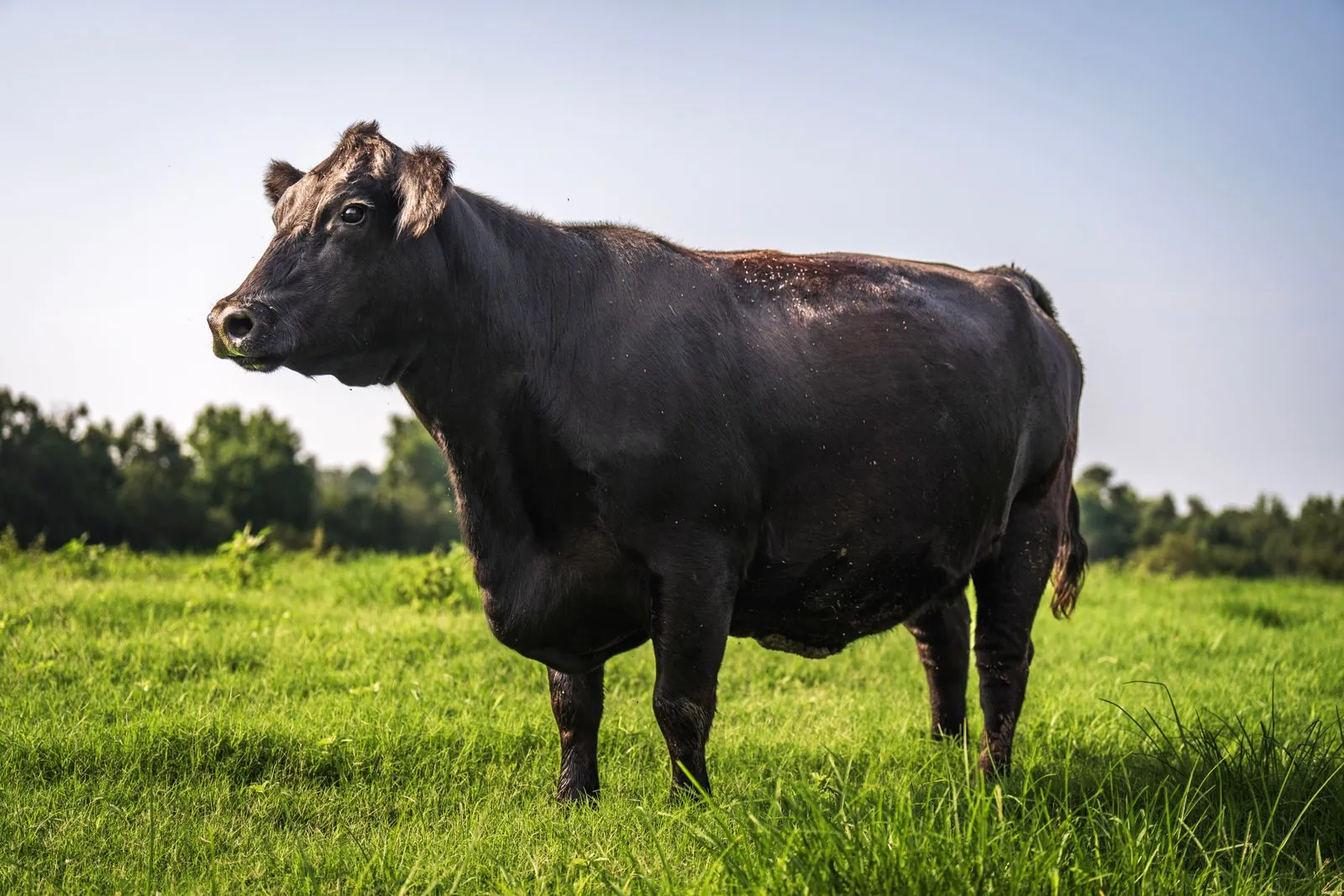
Body condition scoring is a quick, hands on way to estimate how much fat a beef animal is carrying, by feeling the short ribs and the tail head and giving a number. Most Australian guides use a 1 to 5 scale, where 1 is poor and 5 is fat, while American extension guides use 1 to 9 (FutureBeef 2012; Karisch 2024). It matters because condition at calving drives how quickly cows get back in calf: MLA's northern guide estimates about 50 per cent pregnancy for lactating cows in score 2 at the end of the dry season, against about 70 per cent in score 3 (Meat & Livestock Australia 2025).
What is body condition scoring in beef cattle?
MLA's More Beef from Pastures program describes condition scoring as "a simple and reliable estimate of the body fat reserves of live cattle". The score "is independent of size and is a more reliable descriptor than liveweight alone" (Meat & Livestock Australia n.d.).
Mississippi State University Extension adds that shrink, gut fill and pregnancy all shift liveweight without changing nutritional state (Karisch 2024). Weight tells you how big the beast is. Condition tells you how much reserve it has.
Why does body condition matter?
Fertility, calving and joining
Agriculture Victoria says the fat score cows calve down in "has a significant impact on their subsequent fertility": the better the score at calving, the quicker cows return to oestrus (Agriculture Victoria n.d.). A cow at fat score 3 on good feed after calving takes about 30 days to first heat. At fat score 2 on poor feed, it takes about 90 days, which can shift the calving pattern and raise the empty rate (Agriculture Victoria n.d.).
Too much condition is a problem too. Over conditioning is expensive and can cause calving problems (Karisch 2024), and a cow in score 5 at the end of the dry season has usually not reared a calf for some time and may be a poor breeder (Meat & Livestock Australia 2025).
Selling, feeding and drought
For fattening cattle, condition lets you pick out animals with the fat cover a market wants (Meat & Livestock Australia n.d.). In drought, Agriculture Victoria uses fat score as the standard when feeding for survival, because weight varies so much with breed, sex, age and pregnancy. It advises that dry beef cows should not fall below fat score 2, and that cows should not lose more than 0.5 kg a day (Agriculture Victoria n.d.). The national low condition guide says cattle assessed at BCS 0 should not be consigned to saleyards, as they carry welfare risks and have no commercial value (Blackwood et al. 2018).
Which scale: 1 to 5, 0 to 6 or 1 to 9?
- 1 to 5 (Australian BCS). FutureBeef calls this the standard system: 1 poor, 2 backward, 3 moderate, 4 forward, 5 fat (FutureBeef 2012).
- 0 to 5. The national guide to cattle in low body condition added a score of 0 below the old 1 to 5 range, for extremely low condition (Blackwood et al. 2018).
- 0 to 6 fat score. Agriculture Victoria's drought manual scores fat from 0 (emaciated) to 6, with half scores written as L (low) or H (high), such as 2H (Agriculture Victoria n.d.).
- 1 to 9 (US). Mississippi State describes 1 as emaciated, 5 as moderate and 9 as extremely fat (Karisch 2024).
The national guide links the Australian systems: fat score 1 lines up with BCS 2, fat score 2 with BCS 3, fat score 3 with BCS 4, and fat scores 4 to 6 with BCS 5 (Blackwood et al. 2018). We found no official conversion between the Australian 1 to 5 scale and the US 1 to 9 scale, so do not convert by simple arithmetic.
CattleScale reports condition on the 1 to 9 beef scale, where 5 is moderate. A 5 from the app is not a 5 on an Australian 1 to 5 sheet, which would mean a fat animal.
How do you body condition score a cow by hand?
The Australian method feels two sites at the same time (Agriculture Victoria 2020):
- The short ribs. Place your fingers flat over the short ribs and press your thumb into their ends. The score depends on how easily each one can be felt.
- The tail head. Use fingers and thumb to feel the fat either side of the tail head.
These sites work because fat is the only tissue laid down there, so you are not confusing fat with muscle (Agriculture Victoria n.d.). On Agriculture Victoria's fat score table, the short ribs go from sharp, to rounded, to felt only with firm thumb pressure, to not felt at all, while the tail head goes from no fat, to slight soft mounds, to almost buried in fat.
When the sites disagree, split the difference: short ribs that feel like a 4 with a typical 3 tail head score 3.5 (Agriculture Victoria 2020). Feeling is especially useful when a long coat or loose hide hides the outline (Karisch 2024).
Can you score cattle by eye?
Yes. Agriculture Victoria says visual assessment is less accurate but gives a good indication during a paddock inspection, looking at the rear, brisket and flank. As cattle get fatter, the ribs become less visible, the tail head softens with rounds of fat, and the brisket, flank, cod and twist fill out (Agriculture Victoria n.d.).
FutureBeef's field check on the 1 to 5 scale: at score 3, hip bones are faintly visible, ribs usually are not, and the outline is almost smooth (FutureBeef 2012).
A photo gives even less to go on. CattleScale gives a 1 to 9 condition estimate from a side on photo. Treat it as a prompt to put a hand on the animals that look thin, not a replacement for hands on scoring.
What condition score should cows be at calving and joining?
MLA's More Beef from Pastures sets these minimums on the 1 to 5 scale (Meat & Livestock Australia n.d.):
- 2.5 at calving for autumn calving cows
- 2.5 at the start of mating for autumn calving cows
- 2.0 at calving for spring calving cows.
Agriculture Victoria's own page lists 2.0, not 2.5, at the start of mating for autumn calving (Agriculture Victoria 2020), so confirm the target with your adviser. In northern herds, MLA's target is 3 or better at calving (Meat & Livestock Australia 2025). The table shows why.
| Condition score | Description | Likely pregnancy rate in the coming growing season |
|---|---|---|
| 1 | Poor | Up to 25% |
| 2 | Backward | 50% |
| 3 | Moderate (store) | 70% |
| 4 | Good | 85% |
| 5 | Fat | 75% |
On the US 1 to 9 scale, Mississippi State recommends 5 at calving for mature cows and 6 for heifers, with breeding females between 5 and 7 from the start of calving through the breeding season (Karisch 2024).
How much weight is one condition score?
Agriculture Victoria puts it plainly: "One fat score is the equivalent of 70 kg liveweight." At a loss of 0.5 kg a day, a cow takes about 140 days to drop one fat score, from 3H to 2H (Agriculture Victoria n.d.).
On the 1 to 9 scale, Mississippi State says the gap between scores usually ranges from 70 to 140 pounds (about 32 to 64 kg). A 1,200 pound (about 545 kg) cow at score 5 needs about 96 pounds (about 44 kg) to reach score 6 (Karisch 2024).
Agriculture Victoria also links a score 3 cow to 13 to 15 mm of fat at the P8 rump site (Agriculture Victoria 2020). For the weight side, see how much does a cow weigh and cattle average daily gain.
When should you score, and what do you do with the scores?
Mississippi State suggests scoring at weaning, 60 days before calving, at calving, and at the start of the breeding season (Karisch 2024).
- Draft on condition. Cows can be drafted at weaning on score so those unlikely to reach target by calving get preferential feeding (Meat & Livestock Australia n.d.). Where the spread is wide, splitting mobs by fat score is common practice (Agriculture Victoria n.d.).
- Watch the tail. Check a few of the poorer animals every week and adjust the ration if they move too fast or too slow (Agriculture Victoria n.d.).
- Wean to save condition. MLA calls weaning the single most effective tool for managing breeder condition, equivalent in the early dry season to a supplement of up to 3 kg of grain a day (Meat & Livestock Australia 2025).
- Keep records. Mississippi State recommends routine records (Karisch 2024). Write the scale next to every score.
Weights belong alongside: see why cattle liveweight matters.
Where does CattleScale fit?
CattleScale estimates live weight from a side on photo, with a range and a Low, Moderate or Good confidence rating. It also reports body condition on a 1 to 9 beef scale, an AUS-MEAT muscle score, a frame score, an approximate age and an indicative value from MLA indicators.
On 70 scale-weighed cattle, our first model's typical weight error was about 23 per cent, with the true weight inside the range about four times in ten. A newer model, re-run on all 72 of those cattle in October 2026, did no better at about 23 per cent, so without a measured scale the app now shows a wider range, from 25 per cent under its estimate to 50 per cent over, which held the true weight about eight times in ten on that test. The detail is in our accuracy FAQ.
A photo based condition score is an estimate too, and hands on scoring is the standard. Use the app to flag animals worth a closer look, and do not dose, buy or sell on its numbers.
Frequently asked questions
What is a good body condition score for a beef cow?
On the Australian 1 to 5 scale, MLA sets minimums at calving of 2.5 for autumn calving cows and 2.0 for spring calving cows, and 3 or better in northern herds. On the US 1 to 9 scale, 5 at calving is recommended for mature cows.
Where do you feel to condition score cattle?
At the short ribs and the tail head. Press your thumb into the ends of the short ribs and feel the fat either side of the tail head at the same time. If the two disagree, use a half score.
Is a condition score of 5 good or bad?
On the Australian 1 to 5 scale, 5 means fat. On the US 1 to 9 scale, 5 is moderate and is the recommended score at calving for mature cows. Always check the scale.
How much weight is one condition score?
Agriculture Victoria puts one fat score at about 70 kg of liveweight. On the US 1 to 9 scale, Mississippi State says the gap usually ranges from 70 to 140 pounds, about 32 to 64 kg.
Can an app score body condition from a photo?
It can give an estimate. CattleScale reports a 1 to 9 condition estimate from a side on photo, but hands on scoring remains the standard. Use it to decide which animals to check.
References
- Agriculture Victoria (2020) 'Condition scoring of beef cattle', Agriculture Victoria. Available at: https://agriculture.vic.gov.au/livestock-and-animals/beef/health-and-welfare/condition-scoring-of-beef-cattle (Accessed: 4 October 2026).
- Agriculture Victoria (n.d.) 'Drought feeding and management of beef cattle, Chapter 4: Monitoring stock condition', Agriculture Victoria. Available at: https://www.feedinglivestock.vic.gov.au/wp-content/uploads/2025/06/CS-1717-Drought-Feeding-and-Management-of-Beef-Cattle_V4_Chapter-4.pdf (Accessed: 4 October 2026).
- Blackwood, I., Exton, S., Littler, B. and Siddell, J. (2018) 'A national guide to describing and managing beef cattle in low body condition', Meat & Livestock Australia. Available at: https://www.integritysystems.com.au/globalassets/isc/pdf-files/lpa-documents/a-national-guide-to-describing-and-managing-beef-cattle-in-low-body-condition.pdf (Accessed: 4 October 2026).
- FutureBeef (2012) 'Body condition score for beef cattle', FutureBeef. Available at: https://futurebeef.com.au/resources/body-condition-score-for-beef-cattle/ (Accessed: 4 October 2026).
- Karisch, B. (2024) 'Body condition scoring beef cattle', Publication 2508, Mississippi State University Extension Service. Available at: https://extension.msstate.edu/publications/body-condition-scoring-beef-cattle (Accessed: 4 October 2026).
- Meat & Livestock Australia (2025) 'Weaner management in northern beef herds', 2nd edn, Meat & Livestock Australia. Available at: https://www.mla.com.au/globalassets/mla-corporate/research-and-development/program-areas/animal-health-welfare-and-biosecurity/mla-weaner-management-northern-beef-manual-2nd-edition-0925.pdf (Accessed: 4 October 2026).
- Meat & Livestock Australia (n.d.) '5.02 Condition scoring beef cattle', More Beef from Pastures, Meat & Livestock Australia. Available at: https://mbfp.mla.com.au/weaner-throughput/tool-52-condition-scoring-beef-cattle/ (Accessed: 4 October 2026).