 CattleScale
Why knowing your cattle's liveweight matters: drenching, selling and feed
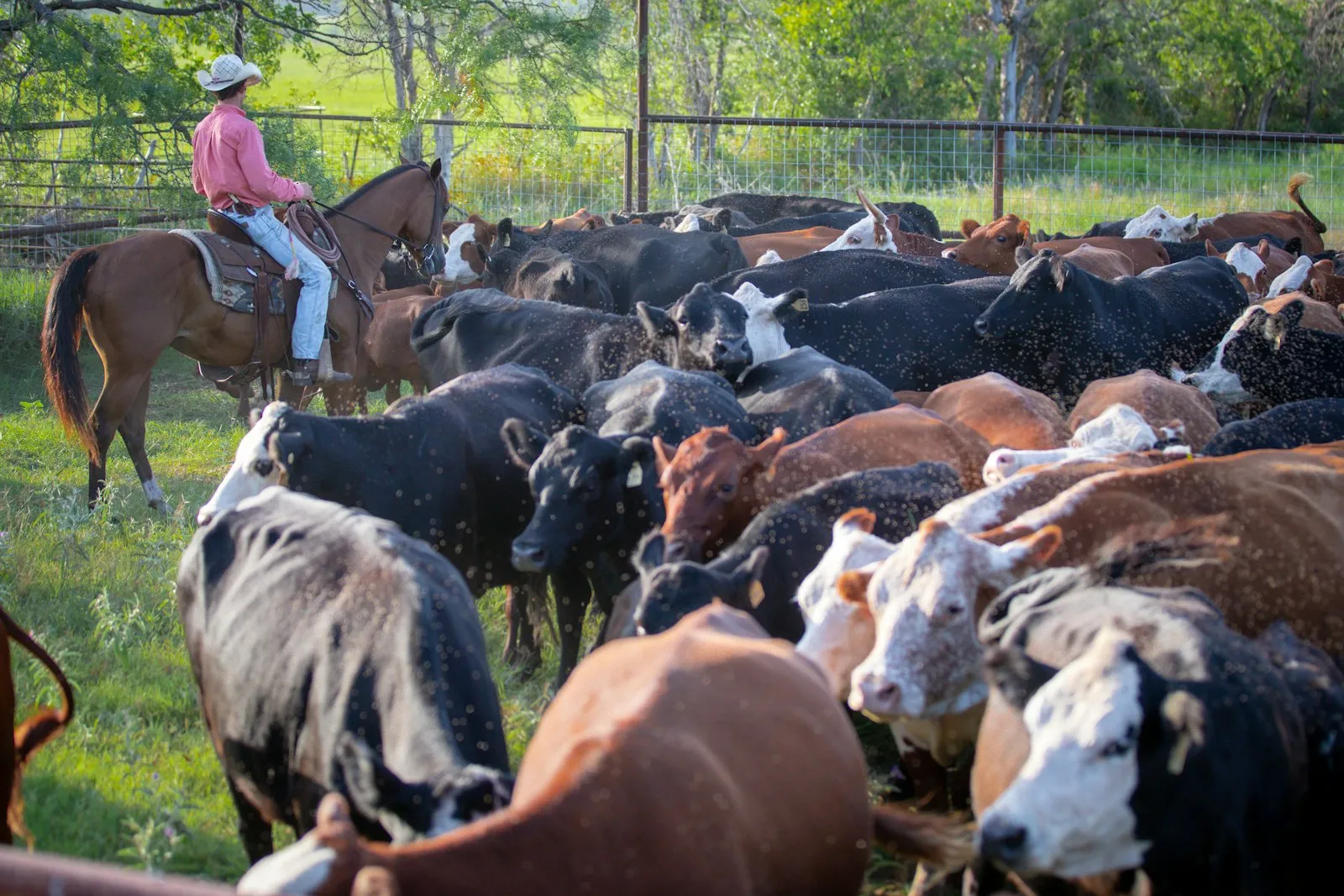
Liveweight is the number most cattle decisions run on. Drench and drug doses are set per kilogram, sale prices are quoted in cents per kilogram, and feed budgets start from how heavy the stock are. Knowing it, rather than guessing, helps you dose safely, judge an offer and plan feed.
Why does liveweight matter so much for cattle?
Three big calls depend on weight: how much drench goes into each animal, what it is worth, and how much feed the mob needs. Get the weight wrong and all three are wrong with it.
How do you calculate a drench dose for cattle?
Drench doses are set by bodyweight, and a mob with a wide spread of weights can cross several dose ranges (WormBoss n.d.b). The product label gives the rate, and the animal's weight decides how much it gets. Meat & Livestock Australia's More Beef from Pastures program advises that, to reduce the risk of drench resistance, producers should "ensure cattle are weighed and drenched to heaviest and drenching equipment is calibrated correctly" (MLA n.d.b).
WormBoss, the industry worm control program, gives the same rule for a mob: it is "standard good practice to dose a mob based on the heaviest animal (to avoid underdosing)". With a wide spread of weights and a drug with a narrow safety margin, it suggests splitting the mob into heavier and lighter groups, because an excessive dose raises the risk of toxicity and may breach residue limits (WormBoss n.d.b).
Before drenching, WormBoss also suggests dispensing into a measuring cup to check the gun delivers the right volume (WormBoss n.d.a).
Why does underdosing lead to drench resistance?
WormBoss lists "widespread underdosing of a chemical (e.g. underestimating the weight of animals being treated, poor application technique, uncalibrated dosing)" as one way a parasite population develops resistance (WormBoss n.d.a). As WormBoss puts it, underdosing "will not kill all of the worms in the animal and it will select for drench resistance" (Kahn 2016). Agriculture Victoria notes that drench resistance is emerging in beef herds, and a faecal worm egg count reduction trial shows whether a drench still works on your property (Agriculture Victoria n.d.a).
The plain rule: for any dose, use a scale, or follow the label and your vet's advice. Do not dose on an eyeball guess, a tape or a photo estimate.
How are cattle priced in Australia?
MLA defines liveweight (lwt) as the weight of the live animal, and carcase weight (cwt) as the weight of the meat and bone once offal, hide and hooves are removed. Selling "over the hooks" means selling straight to a processor on a cents per kilogram carcase weight basis, and MLA notes that producers typically get paid on carcase weight when selling to an abattoir (MLA n.d.a).
Other channels vary. Paddock sales are generally negotiated in dollars per head or cents per kilogram liveweight, and if the sale is by weight the animals have to be weighed. Many larger saleyards have scales and sell on a liveweight basis, with cattle that miss the curfew sold per head. AuctionsPlus can sell on dollars per head, cents per kilogram liveweight, cents per kilogram carcase weight or on a grid (FutureBeef 2011).
What is dressing percentage?
Dressing percentage is carcase weight as a percentage of liveweight. The NSW Department of Primary Industries Primefact on the topic gives the two formulas: dressing percentage equals carcase weight divided by liveweight, times 100; and carcase weight equals liveweight times dressing percentage. It is what lets you compare a liveweight price with a carcase price (McKiernan, Gaden and Sundstrom 2007). MLA puts the usual range at 38 to 60 per cent, depending on the animal's condition, sex and breed (MLA n.d.a).
The Primefact's worked example shows why timing matters. The same steer gives three different answers depending on when it was weighed and how the carcase was weighed:
| Situation | Liveweight | Carcase weight | Dressing % |
|---|---|---|---|
| Weighed full, straight off feed | 400 kg | 208 kg (hot) | 52% |
| Weighed after an overnight curfew (about 5% gutfill lost) | 380 kg | 208 kg (hot) | 54.7% |
| Full weight, processor deducts 3% for a cold weight | 400 kg | 202 kg (cold) | 50.5% |
The Primefact also lists sex, age, weight, fatness, muscling and pregnancy as factors, recommends using the same timing whenever you weigh (such as two hours off feed), and warns to be wary of claims of 60 per cent and over (McKiernan, Gaden and Sundstrom 2007).
How does dressing percentage help you judge an offer?
Because carcase weight is liveweight times dressing percentage, a carcase price multiplied by the dressing percentage gives the equivalent price per kilogram of liveweight. With a known weight, you can put a liveweight bid and an over the hooks quote side by side before you load the truck.
What are MLA's cattle market indicators?
MLA's National Livestock Reporting Service publishes cattle indicators as seven-day rolling averages across all NLRS reported saleyards and online sales platforms, quoted in cents per kilogram liveweight or carcase weight (MLA 2024). For example, the National Heavy Steer Indicator covers grown steers of 400 to 750 kg liveweight, quoted on liveweight, and represents cattle typically destined for domestic processing. The Eastern Young Cattle Indicator (EYCI) covers vealer and yearling steers and heifers from 200 kg, is reported in carcase weight form, and is now made up predominantly of restocker buyers (MLA 2024).
MLA likens the EYCI to a share index and warns that individual saleyard prices are likely to be much more volatile (MLA 2018). Prices change daily, so check the current figures on MLA's prices and markets page. An indicator is an average, not a bid, but with a weight in hand it is a useful yardstick.
How much feed do cattle need per day?
Agriculture Victoria's drought feeding guide puts it bluntly: "To precisely plan feeding management, you need to have some idea of liveweights and expected growth rates of cattle. This can only be achieved by weighing cattle." Cattle have an upper limit to appetite, which can be expressed as a percentage of liveweight (Agriculture Victoria n.d.b).
For weaned steers and heifers growing at 0.5 kg a day, the guide lists maximum daily dry matter intake as 2.5 per cent of liveweight (7.5 kg) for a 300 kg animal and 2.1 per cent (10.5 kg) for a 500 kg animal (Agriculture Victoria n.d.b). Its maintenance energy formula is also tied to weight: megajoules of metabolisable energy per day equals 0.1 times liveweight, plus 5 (Agriculture Victoria n.d.c). When building a feed budget, the guide says to use the average liveweight across the budget period, so cattle expected to grow from 300 kg to 350 kg are budgeted at 325 kg (Agriculture Victoria n.d.b).
What is a dry sheep equivalent (DSE)?
A DSE is a common unit for comparing feed needs. NSW DPI uses a 50 kg wether maintained at constant weight as 1 DSE (NSW DPI 2022). MLA's More Beef from Pastures table rates a dry cow or steer at maintenance as 7 DSE at 400 kg and 8 DSE at 500 kg, and a 200 kg weaned calf gaining 0.25 kg a day as 5.5 DSE. It advises picking one rating system and sticking with it (MLA n.d.c). NSW DPI cautions that in drought, comparisons on a DSE basis may be inaccurate, and the safe number of cattle may be lower than the DSE figures suggest (NSW DPI 2022).
Why track weight gain over time?
A series of weights tells you whether your management is working. Agriculture Victoria reports that worm burdens can hold back weight gains in beef cattle by up to 300 grams per head per day, which can delay turn-off by 30 to 40 days and affect heifers reaching mating weights. It cites a Victorian study where undrenched weaner groups were 14 to 26 kg lighter than drenched groups by November, and recommends using weight gain alongside worm egg counts to judge the impact of worms (Agriculture Victoria n.d.a).
Method matters for gain. A UK study of pre-weaned calves found heart girth tapes estimated individual weights fairly well, but were unreliable for measuring an individual calf's daily gain, especially over short intervals. Group estimates were relatively accurate, and the error fell as the gap between weighings grew (Sherwin et al. 2021). Whatever you use, use the same method at the same time relative to feed each time.
What are the ways to get a cattle weight?
- Scales. The right tool for dosing and for any sale by weight. Weigh at a consistent time off feed so numbers are comparable (McKiernan, Gaden and Sundstrom 2007).
- Weigh tape. Measures heart girth and converts it to weight. Reasonable for individual estimates in the study above, which was on young calves, not grown cattle (Sherwin et al. 2021).
- Eye or photo estimate. Quick, but the least precise. Our guide on how to estimate cattle weight without scales covers the options in more detail.
When is an estimate good enough?
An estimate is reasonable for rough feed budgets, pre-sorting a mob, and checking whether an offer is in the ballpark. It is not good enough for a drench or drug dose, a sale by weight, or any record that must stand up. For those, weigh the animal.
Where does CattleScale fit?
CattleScale estimates an animal's liveweight from a side on photograph and shows a range around the number with a Low, Moderate or Good confidence rating. It also shows an indicative value from Meat & Livestock Australia's published indicators. It is an estimate, not a weigh scale. On our first test of 70 scale-weighed cattle, the typical error was about 23 per cent and the true weight fell inside the shown range about four times in ten. A newer model, re-run on all 72 of those cattle in October 2026, did no better at about 23 per cent, so without a measured scale the app now shows a wider range, from 25 per cent under its estimate to 50 per cent over, which held the true weight about eight times in ten on that test. So the app's own advice applies here too: do not dose, buy or sell on its estimate. The full detail is in our questions and answers.
Frequently asked questions
Should I dose cattle to the average weight or the heaviest?
The heaviest. WormBoss calls dosing a mob to the heaviest animal standard good practice to avoid underdosing. If weights are very spread, split the mob into heavier and lighter groups, especially for drugs with a narrow safety margin (WormBoss n.d.b).
Is it OK to estimate weight for drenching?
Not if you can avoid it. Underestimating weight is listed by WormBoss as a cause of underdosing and drench resistance (WormBoss n.d.a). Weigh the cattle, or follow the label and your vet's advice.
How do I convert liveweight to carcase weight?
Multiply liveweight by the dressing percentage. A 400 kg steer dressing at 52 per cent gives a 208 kg carcase (McKiernan, Gaden and Sundstrom 2007). MLA gives the usual range as 38 to 60 per cent (MLA n.d.a).
How much will a 500 kg steer eat per day?
Agriculture Victoria lists maximum daily dry matter intake for a 500 kg steer or heifer growing at 0.5 kg a day as 2.1 per cent of liveweight, or about 10.5 kg of dry matter (Agriculture Victoria n.d.b).
References
- Agriculture Victoria (n.d.a) 'Worm control for weaned stock', Agriculture Victoria. Available at: https://agriculture.vic.gov.au/livestock-and-animals/beef/health-and-welfare/worm-control-for-weaned-stock (Accessed: 1 October 2026).
- Agriculture Victoria (n.d.b) 'Drought feeding and management of beef cattle, Chapter 6: Feeding cattle', Agriculture Victoria. Available at: https://www.feedinglivestock.vic.gov.au/wp-content/uploads/2025/06/CS-1717-Drought-Feeding-and-Management-of-Beef-Cattle_V4_Chapter-6.pdf (Accessed: 1 October 2026).
- Agriculture Victoria (n.d.c) 'Drought feeding and management of beef cattle, Appendices', Agriculture Victoria. Available at: https://www.feedinglivestock.vic.gov.au/wp-content/uploads/2025/06/CS-1717-Drought-Feeding-and-Management-of-Beef-Cattle_V4_Appendices.pdf (Accessed: 1 October 2026).
- FutureBeef (2011) 'Selling options for beef cattle', FutureBeef. Available at: https://futurebeef.com.au/resources/selling-options-for-beef-cattle/ (Accessed: 1 October 2026).
- Kahn, L. (2016) 'Use the right dose of drench: under and overdosing and implications for drench resistance', WormBoss. Available at: https://tools.wormboss.com.au/sheep-goats/news/articles/drenches/use-the-right-dose-of-drench-under-and-overdosing-and-implications-for-drench-resistance.php (Accessed: 1 October 2026).
- McKiernan, B., Gaden, B. and Sundstrom, B. (2007) 'Dressing percentages for cattle', Primefact 340, NSW Department of Primary Industries. Available at: https://www.dpird.nsw.gov.au/__data/assets/pdf_file/0006/103992/dressing-percentages-for-cattle.pdf (Accessed: 1 October 2026).
- Meat & Livestock Australia (2018) 'Understanding the Eastern Young Cattle Indicator', Meat & Livestock Australia. Available at: https://mla.com.au/prices-markets/market-news/2018/understanding-the-eastern-young-cattle-indicator (Accessed: 1 October 2026).
- Meat & Livestock Australia (2024) 'National Cattle Indicators', National Livestock Reporting Service, Meat & Livestock Australia. Available at: https://www.mla.com.au/contentassets/c515412afca74d64baadbd1d301e1750/job34771_nlrs-cattle-indicator-specifications_jan25.pdf (Accessed: 1 October 2026).
- Meat & Livestock Australia (n.d.a) 'Market information frequently asked questions', Meat & Livestock Australia. Available at: https://www.mla.com.au/prices-markets/faqs/ (Accessed: 1 October 2026).
- Meat & Livestock Australia (n.d.b) 'Gastrointestinal parasites', More Beef from Pastures, Meat & Livestock Australia. Available at: https://mbfp.mla.com.au/herd-health-and-welfare/tool-6.07cattle-disease-guide/gastrointestinal-parasites/ (Accessed: 1 October 2026).
- Meat & Livestock Australia (n.d.c) 'Determine carrying capacity and stocking rate', More Beef from Pastures: Pastoral, Meat & Livestock Australia. Available at: https://mbfp-pastoral.mla.com.au/managing-your-feedbase/determine-carrying-capacity-and-stocking-rate/ (Accessed: 1 October 2026).
- NSW DPI (2022) 'Using DSEs and carrying capacities to compare sheep enterprises', NSW Department of Primary Industries. Available at: https://www.dpi.nsw.gov.au/agriculture/budgets/livestock/sheep-gross-margins-april-september-2022/background/dse (Accessed: 1 October 2026).
- Sherwin, V., Hyde, R., Green, M., Remnant, J., Payne, E. and Down, P. (2021) 'Accuracy of heart girth tapes in the estimation of weights of pre-weaned calves', Veterinary Record Open, 8(1). doi: 10.1002/vro2.16 (Accessed: 1 October 2026).
- WormBoss (n.d.a) 'Oral drench for cattle', ParaBoss. Available at: https://wormboss.com.au/application-methods/oral-drench/ (Accessed: 1 October 2026).
- WormBoss (n.d.b) 'Drench toxicity and residue violation', ParaBoss. Available at: https://wormboss.com.au/drench-toxicity-residue-violation/ (Accessed: 1 October 2026).