 CattleScale
What weight should beef heifers be at joining?
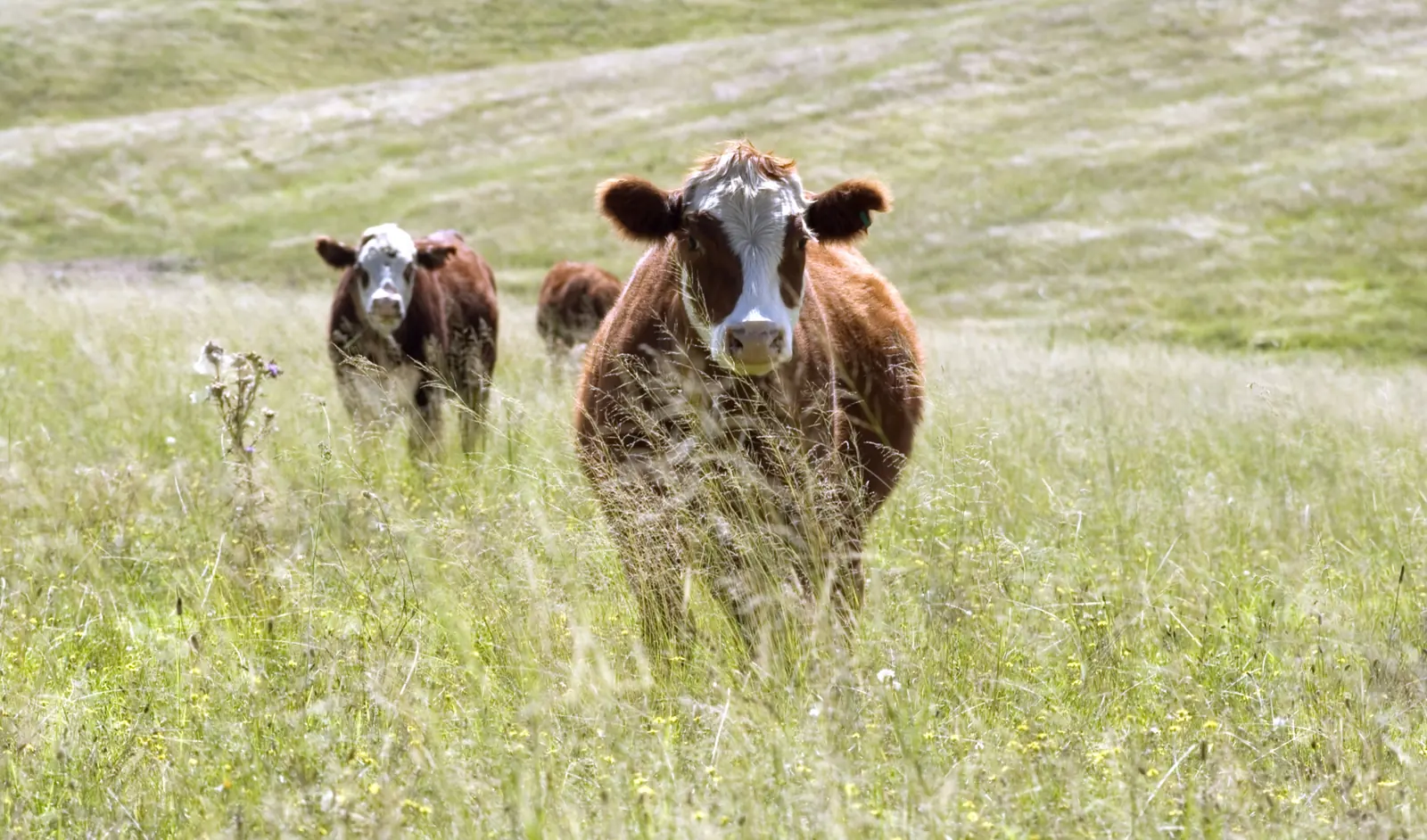
"Join them at 280 kg" is a figure people repeat. FutureBeef calls 280 kg a rule of thumb, and Agriculture Victoria puts 280 kg at the low end of its British-breed range of 280 to 300 kg. Neither guide treats it as the target for every herd. The useful number is a share of what your own mature cows weigh, checked on scales and then on a pregnancy test.
What is critical mating weight?
Critical mating weight is the target for maiden heifers at the start of their first join. It is not a finished cow weight, and it is not the average weight at puberty.
Agriculture Victoria defines it as the weight at which 85 per cent of heifers are expected to conceive within six weeks, generally 65 per cent of the herd's typical adult cow weight. The pay-off it describes is a tighter calf line and a better chance of the heifer holding a 365 day calving interval (Agriculture Victoria 2024).
MLA's toolbox aims at 84 per cent in calf in six weeks, from 60 per cent conceiving in the first cycle and 60 per cent of the rest in the second (60 plus 24). It says the weight varies inside a breed, and that you can set it from a pre joining weigh plus foetal ageing (Meat & Livestock Australia n.d.). FutureBeef says it also depends on how long you join and on the sire (FutureBeef 2011, reviewed 2026).
Why is 280 kg the wrong default?
Agriculture Victoria gives 280 to 300 kg as the critical mating weight for British breeds, and says European, Bos indicus and larger framed cattle need to be heavier (Agriculture Victoria 2024). That is a breed band, not a universal gate.
FutureBeef says producers have leaned on 280 kg as the weight to first join heifers, and that this is the habit to drop. Critical mating weight is not the same thing as the average weight at puberty, and not the same thing as the average weight of the group on joining day. Both of those averages sit heavier. An average puberty weight means only half the heifers have reached puberty. If you join at that average, the lighter half is not cycling yet (FutureBeef 2011, reviewed 2026).
The two guides also do not use the same percentage for puberty itself. Agriculture Victoria says puberty arrives at about 52 per cent of mature body weight, and for British breeds that is between 265 and 280 kg (Agriculture Victoria 2024). FutureBeef says heifers reach puberty at an average of two thirds of the average weight of the operation's mature cows, meaning five year old cows in condition score 3 (FutureBeef 2011, reviewed 2026). Those are different fractions. Do not average them into a third number. Weigh your mature cows in moderate condition and use the guide that matches how you define the herd, then check the result with a pregnancy test.
MLA adds a further reason the joining target sits above puberty: critical mating weight has not been set for every northern breed, it varies inside a breed, and it is heavier than the weight at puberty because the first few cycles after puberty are not always fertile (Meat & Livestock Australia n.d.).
What does 65 per cent look like on two herds?
Agriculture Victoria's note on mature cow size applies the 65 per cent rule without a single breed label (Agriculture Victoria 2022):
- If mature cows weigh 550 kg, heifers should be at least 357 kg at the start of joining. From birth to a 15 month join, that needs about 0.71 kg a day.
- If mature cows weigh 750 kg, heifers should be at least 487 kg, which needs about 0.97 kg a day over the same period.
The heavier group needs about 40 per cent more feed to reach its target at the same age. The page's reason for trying to join at 15 months, so the heifer calves at two, is lifetime output: it says past research found well managed heifers that calve at two have higher lifetime productivity than heifers that calve older. If the heifers miss 65 per cent of mature weight by 15 months, more of them are empty.
A northern manual uses a later gate. MLA's guide for northern weaners says replacement heifers should be fed to reach a mating weight of 340 kg at two years of age (Meat & Livestock Australia 2025). That is not the same plan as a 15 month join. Match the target to the age you actually join, and to the cows those heifers have to become.
Weight is not the only thing that gets them in calf
Weight is the main lever, not the only one. Agriculture Victoria, reporting a Beef CRC project, says heifers with more rib fat had an 8 per cent higher pregnancy rate in a nine week join and 12 per cent higher in a six week join (Agriculture Victoria 2022). FutureBeef wants condition score 3 or better at calving. Hands on scoring is in body condition scoring beef cattle.
How do you know your heifers are on track?
Weigh them more than once between weaning and joining. Agriculture Victoria says to watch fat cover as well, and to supplement in a hard season if the larger heifers fall behind (Agriculture Victoria 2022). Breed averages, which are not a joining target, are in how much does a cow weigh.
Where does CattleScale fit?
CattleScale gives an estimated weight from a photograph, with a range around that estimate. An optional printed ruler sheet in the photo can make the reading sharper. It is an estimate, not a weigh scale. It will not replace the pre joining weigh, and it is the wrong basis for a decision to keep or sell a maiden heifer. Between scale days it can flag animals that look well behind the rest of the mob so you can put those ones over the bars. Confirm the kilograms on scales before you set a critical mating weight for the herd.
Frequently asked questions
What weight should beef heifers be at joining?
Agriculture Victoria uses about 65 per cent of your mature cow weight, which it puts at 280 to 300 kg for British breeds and higher for European, Bos indicus and larger framed cattle (Agriculture Victoria 2024). On the same 65 per cent rule, a 550 kg cow herd means heifers of at least 357 kg, and a 750 kg herd means at least 487 kg (Agriculture Victoria 2022).
Is 280 kg heavy enough?
Only for some British breed herds. FutureBeef says 280 kg has been used as a rule of thumb and that each herd needs its own figure, because an average puberty weight means half the heifers are not cycling yet (FutureBeef 2011, reviewed 2026).
What is the difference between puberty weight and critical mating weight?
Puberty is when cycles start. Critical mating weight is heavier, because you want most of the mob cycling and fertile, not half of them. MLA notes that the first cycles after puberty are not always fertile (Meat & Livestock Australia n.d.). Published guides do not even agree on the puberty percentage: about 52 per cent of mature weight in one Victorian guide, and about two thirds in the northern FutureBeef guide (Agriculture Victoria 2024; FutureBeef 2011, reviewed 2026).
When should heifers be joined?
Agriculture Victoria discusses joining at 15 months so heifers calve at two years, if they can reach 65 per cent of mature weight by then (Agriculture Victoria 2022). A northern MLA manual talks about a mating weight of 340 kg at two years of age (Meat & Livestock Australia 2025). The age and the kilograms belong together.
References
- Agriculture Victoria (2022) 'Mature cow size impacts on replacement heifers', Agriculture Victoria. Available at: https://agriculture.vic.gov.au/livestock-and-animals/beef/breeding/mature-cow-size-impacts-on-replacement-heifers (Accessed: 10 October 2026).
- Agriculture Victoria (2024) 'Maximising live calves in your breeding herd', Agriculture Victoria. Available at: https://agriculture.vic.gov.au/livestock-and-animals/beef/breeding/maximising-live-calves-in-your-breeding-herd (Accessed: 10 October 2026).
- FutureBeef (2011, reviewed 2026) 'Heifer management', FutureBeef. Available at: https://futurebeef.com.au/resources/heifer-management/ (Accessed: 10 October 2026).
- Meat & Livestock Australia (2025) Weaner management in northern beef herds. 2nd edn. Sydney: Meat & Livestock Australia. Available at: https://www.mla.com.au/globalassets/mla-corporate/research-and-development/program-areas/animal-health-welfare-and-biosecurity/mla-weaner-management-northern-beef-manual-2nd-edition-0925.pdf (Accessed: 10 October 2026).
- Meat & Livestock Australia (n.d.) 'Critical mating weight', The Toolbox, MLA eLearning. Available at: https://elearning.mla.com.au/lessons/critical-mating-weight/ (Accessed: 10 October 2026).
This is general information, not advice for your herd or a particular animal. Check with your vet or adviser before you change feeding, treatment, joining or transport.