 CattleScale
How much does a cow weigh? Typical cattle weights by age, sex and breed
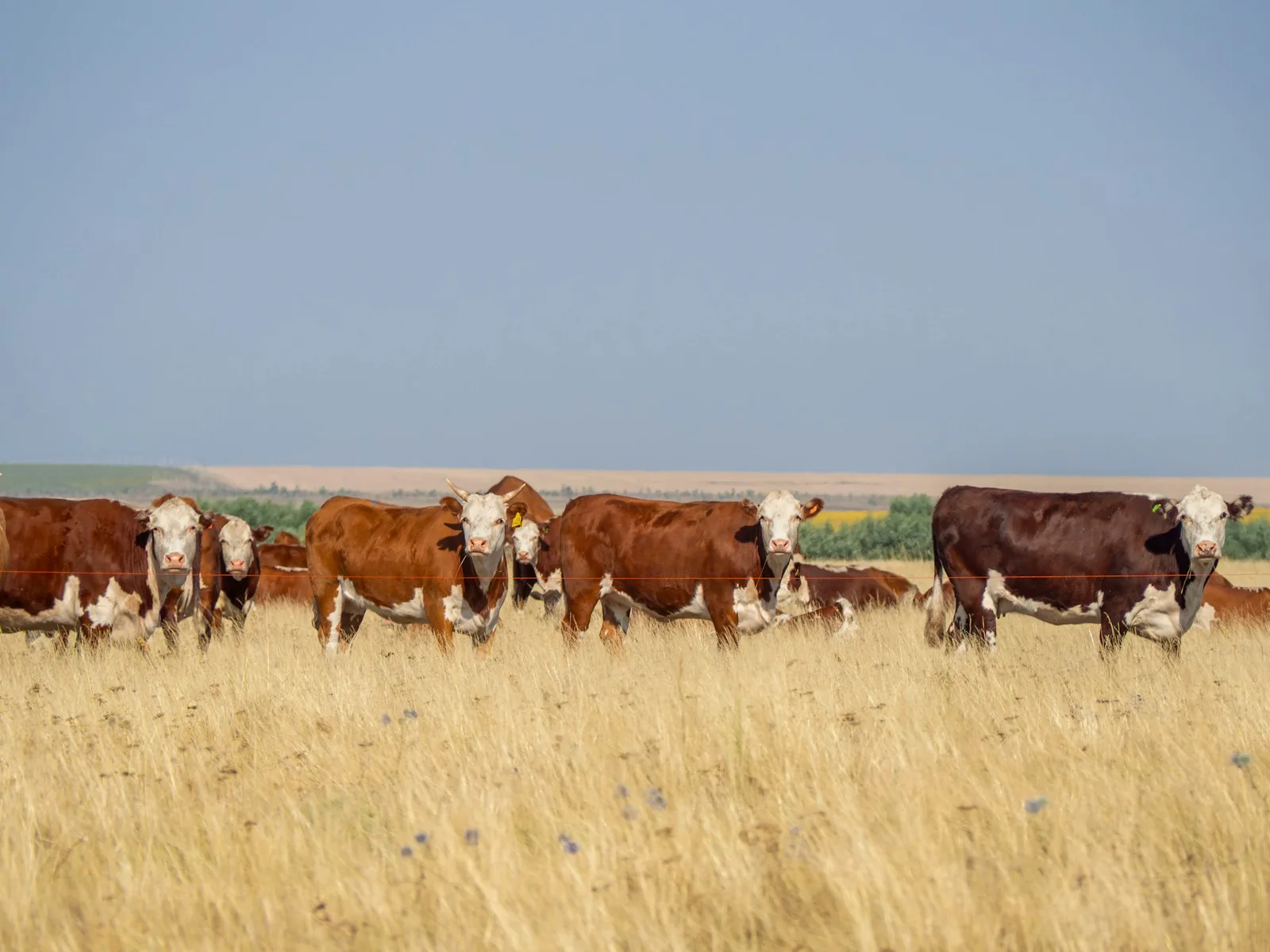
A mature beef cow usually weighs somewhere between about 450 and 730 kg, depending on breed, according to breed descriptions published by the Government of Alberta and Oklahoma State University, and mature bulls run from roughly 730 kg to over 1,200 kg. Calves are born at around 30 to 38 kg on average in Australian studies, weaners sell at 200 to 400 kg, and grown steers bought by processors weigh 400 to 750 kg (Meat & Livestock Australia 2024; Tan 2025).
How much does a calf weigh at birth?
In a study of 2,929 Angus, Hereford and Poll Hereford calves born on six Victorian properties, the average unadjusted birth weight was 30.9 kg, give or take 4.5 kg (Holland, Mullaney and Hopkins 1977). The same study found:
- bull calves were 1.86 kg heavier than heifer calves;
- calves from two year old dams were 15 per cent lighter than calves from mature cows;
- twins were 7.0 kg lighter than single calves.
More recent figures from the Southern Multi Breed project in NSW show how wide the spread can be. Recorded birth weights ranged from 8 kg to 72 kg, with an average of 38 kg across the project (NSW Department of Primary Industries and Regional Development 2024).
Brahman calves are described as small at birth. Oklahoma State University gives 60 to 65 pounds, which is about 27 to 29 kg, and notes they grow quickly and wean at weights comparable to other breeds (Oklahoma State University n.d.).
How much does a weaner weigh?
Meat & Livestock Australia (MLA) describes weaner sales as calves of 8 to 10 months, typically ranging from 200 to 400 kg, steers or heifers (Tan 2025). In MLA's producer survey the average turn-off weight for weaners was 306.59 kg, so a little over 300 kg.
Where those weaners go depends on weight. MLA reports that calves of 400 kg or more typically go to feedlots, while those of 300 to 320 kg are sold to backgrounders (Tan 2025).
How much do yearlings and steers weigh?
MLA's market reporting groups cattle by sex, teeth and weight rather than by exact age. A yearling is a castrate male or female with mostly no permanent teeth, although two are allowed (Meat & Livestock Australia 2021). MLA's national indicators give a useful picture of the weights that actually trade (Meat & Livestock Australia 2024):
- Restocker yearling steers and heifers: 200 to 400 kg.
- Feeder steers: yearling steers from 200 kg up, and grown steers up to 600 kg.
- Heavy steers (grown steers bought by processors): 400 to 750 kg.
Grown steers usually have 4 to 6 permanent teeth (Meat & Livestock Australia 2021). Our guide on telling cattle age by teeth explains the tooth stages.
How much does a mature cow weigh?
Breed, frame and condition all move the figure. The table lists published mature weights for common beef breeds.
| Breed | Mature cow | Mature bull |
|---|---|---|
| Angus | about 568 kg (average) | about 1,045 kg (average) |
| Hereford | 591 to 682 kg | 1,000 to 1,045 kg |
| Murray Grey | 454 to 591 kg | 818 to 1,000 kg |
| Shorthorn | about 636 kg (average) | about 1,045 kg (average) |
| Brahman | about 454 to 635 kg (1,000 to 1,400 lb) | about 726 to 998 kg (1,600 to 2,200 lb) |
| Charolais | about 727 kg | about 1,136 kg (average) |
| Limousin | 636 to 727 kg | about 1,091 kg |
| Simmental | about 727 kg (average) | 1,091 to 1,273 kg |
Treat these as rough guides. They come from North American breed descriptions, and breeds change as they are selected. A large United States study of 5,156 crossbred cows found Angus was the heaviest breed at maturity of the 16 compared, ahead of Charolais and Hereford, with Brahman fourth (Zimmermann et al. 2021). That does not match the breed descriptions in the table, where Angus cows sit among the lighter breeds, which is a good reason not to lean too hard on any breed average.
Agriculture Victoria uses 550 kg and 750 kg as its two worked examples of mature cow weight when setting heifer joining targets, and suggests heifers reach 65 per cent of their mature weight by joining: at least 357 kg for a 550 kg cow herd and 487 kg or more for a 750 kg herd (Agriculture Victoria 2022).
Does breed type change weight?
Yes, but not always the way you would expect from looking. In a Queensland study of 2,181 Brahman and tropical composite females, non pregnant Bos taurus cattle were calculated to be 10 to 40 per cent heavier than Brahmans at the same hip height and body condition (Fordyce et al. 2013). So a Brahman can weigh less than a British breed cow of the same height.
The larger European breeds such as Charolais, Simmental and Limousin sit at the top end of the published cow and bull figures in the table above (Government of Alberta 2018). Frame size is a big part of this. Our article on frame score and muscle score covers how frame is measured.
How much heavier are bulls than cows?
By the breed figures in the table, mature bulls weigh roughly 1.5 to 1.9 times as much as mature cows of the same breed, comparing the middle of each range (our arithmetic). For Angus, for example, the averages are about 1,045 kg for bulls and 568 kg for cows (Government of Alberta 2018). The gap starts small: bull calves in the Victorian study were only 1.86 kg heavier at birth (Holland, Mullaney and Hopkins 1977).
Why does a cow's weight vary so much?
Even for one animal, live weight is a moving target.
Gut fill
In adult cattle, gut fill can account for 12 to 25 per cent of live weight (Wythes 2011). FutureBeef's table shows a 400 kg animal losing about 25 kg after 6 hours without feed and water, and about 32 kg after 24 hours. MLA's assessment manual says most of the live weight changes seen at saleyards are changes to gut content (Meat & Livestock Australia 2021).
Body condition
In the Queensland study, live weight varied by 12 to 14 per cent for each condition score (on a 5 point scale) that a cow sat above or below moderate condition (Fordyce et al. 2013). On a 500 kg cow that is 60 to 70 kg per score (our arithmetic), so two cows of the same frame two scores apart can differ by more than 100 kg. For how condition is scored, see body condition scoring beef cattle.
Pregnancy
Fordyce et al. (2013) concluded that pregnancy adds weight to cows at all stages rather than replacing body weight. Using the pregnancy equation published in that paper, the extra weight works out at roughly 49 kg by day 270. That is our arithmetic, not a figure they state.
Frame and age
Larger framed cattle need more feed. Agriculture Victoria estimates heifers from the heavier, larger framed cows need about 40 per cent more feed to reach their joining weight at the same age (Agriculture Victoria 2022). Young cows are also still growing, which is one reason calves from two year old dams are lighter (Holland, Mullaney and Hopkins 1977).
Kilograms or pounds?
Australia uses kilograms, but many breed descriptions and overseas articles use pounds. One pound is 0.4536 kg (National Institute of Standards and Technology n.d.), so one kilogram is about 2.2 lb. To convert an American figure quickly, divide pounds by 2.2.
How can you find out what your animal weighs?
- Scales. The only way to get a true weight. Note how long the animal has been off feed and water, because gut fill changes the reading (Wythes 2011).
- A tape and formula. A tape gives an estimate, not a weighing. Our guide to estimating cattle weight without scales covers the formula and how accurate it really is.
- An estimate by eye or from a photo. Quick, but treat the result as a rough starting point only.
If you have no scales, a photo based tool such as CattleScale can give you a starting figure. It estimates live weight from a side on photo and shows a range with a Low, Moderate or Good confidence rating, rather than a single number. Read how accurate it really is before relying on it.
Where does CattleScale fit?
CattleScale is for when you want a rough idea and cannot get the animal on scales. See why cattle live weight matters for what the number is used for. From a side on photo it gives an estimated live weight with a range and a confidence rating, plus a body condition score on a 1 to 9 beef scale, an AUS-MEAT muscle score (A to E), a frame score (0 to 9), an approximate age, and an indicative value based on MLA indicators.
Be clear about its limits. In our first test on 70 cattle weighed on scales, the typical error was about 23 per cent, and the true weight fell inside the shown range about four times in ten. A newer model, re-run on all 72 of those cattle in October 2026, did no better at about 23 per cent, so without a measured scale the app now shows a wider range, from 25 per cent under its estimate to 50 per cent over, which held the true weight about eight times in ten on that test. The girth and length formula behind it is within about six per cent when fed real tape measurements. It is an estimate, not a weigh scale: do not dose, buy or sell on it.
Frequently asked questions
How much does an average cow weigh in kg?
Published breed averages for mature beef cows range from about 450 kg to about 730 kg. Murray Grey and Brahman cows sit at the lighter end, and Charolais, Simmental and Limousin at the heavier end. Condition, gut fill and pregnancy can move any one cow well away from its breed average.
How much does a bull weigh?
Mature beef bulls weigh roughly 730 kg to over 1,200 kg depending on breed. Published averages include about 1,045 kg for Angus and Shorthorn, about 1,136 kg for Charolais, and 1,091 to 1,273 kg for Simmental. Brahman bulls are given as 1,600 to 2,200 lb, about 726 to 998 kg.
How much does a newborn calf weigh?
A Victorian study of Angus and Hereford calves found an average birth weight of 30.9 kg. A NSW multi breed project recorded weights from 8 kg to 72 kg with an average of 38 kg. Bull calves are a little heavier than heifers, and calves from young dams are lighter.
What weight are weaners sold at in Australia?
MLA describes weaners as calves of 8 to 10 months, typically 200 to 400 kg. Its producer survey put average weaner turn-off at about 307 kg. Calves of 400 kg or more typically go to feedlots, and those of 300 to 320 kg to backgrounders.
Why does the same cow weigh differently on different days?
Mostly gut fill, which can be 12 to 25 per cent of an adult's live weight. A 400 kg animal can lose about 25 kg after 6 hours without feed and water.
References
- Agriculture Victoria (2022) 'Mature cow size impacts on replacement heifers', Agriculture Victoria. Available at: https://agriculture.vic.gov.au/livestock-and-animals/beef/breeding/mature-cow-size-impacts-on-replacement-heifers (Accessed: 4 October 2026).
- Fordyce, G., Anderson, A., McCosker, K., Williams, P.J., Holroyd, R.G., Corbet, N.J. and Sullivan, M.S. (2013) 'Liveweight prediction from hip height, condition score, fetal age and breed in tropical female cattle', Animal Production Science, 53, pp. 275-282. Available at: https://era.dpi.qld.gov.au/id/eprint/3747/1/AN12253.pdf (Accessed: 4 October 2026).
- Government of Alberta (2018) 'Alberta beef breeds', Alberta Agriculture and Forestry. Available at: https://www1.agric.gov.ab.ca/$department/deptdocs.nsf/all/beef1710 (Accessed: 4 October 2026).
- Holland, B.J.M., Mullaney, P.D. and Hopkins, I.R. (1977) 'Breed and environmental factors affecting birth weight in Victorian beef cattle', Australian Journal of Experimental Agriculture and Animal Husbandry, 17(84), pp. 5-9. Available at: https://doi.org/10.1071/EA9770005 (Accessed: 4 October 2026).
- Meat & Livestock Australia (2021) Cattle assessment manual. Sydney: Meat & Livestock Australia. Available at: https://www.mla.com.au/globalassets/mla-corporate/extensions-training-and-tools/documents/assessmentmanual-cattle.pdf (Accessed: 4 October 2026).
- Meat & Livestock Australia (2024) National cattle indicators. Sydney: Meat & Livestock Australia. Available at: https://mla.com.au/contentassets/2b3a2fcab8bf4b868bfcd0bdbdce3c21/mla_nlrs-national-cattle-indicators-spec-sheet.pdf (Accessed: 4 October 2026).
- National Institute of Standards and Technology (n.d.) 'NIST Guide to the SI, Appendix B.9: Factors for units listed by kind of quantity or field of science', NIST. Available at: https://www.nist.gov/pml/special-publication-811/nist-guide-si-appendix-b-conversion-factors/nist-guide-si-appendix-b9 (Accessed: 4 October 2026).
- NSW Department of Primary Industries and Regional Development (2024) 'Research reveals key insights into breeding Brahmans', NSW DPIRD. Available at: https://www.dpi.nsw.gov.au/dpi/animals/beef/breeding/smb-project/news-and-updates/news/research-reveals-key-insights-into-breeding-brahmans (Accessed: 4 October 2026).
- Oklahoma State University (n.d.) 'Brahman cattle', Breeds of Livestock, Department of Animal and Food Sciences. Available at: https://breeds.okstate.edu/cattle/brahman-cattle (Accessed: 4 October 2026).
- Tan, E. (2025) Weaner producer factsheet. Sydney: Meat & Livestock Australia. Available at: https://mla.com.au/globalassets/mla-corporate/prices--markets/documents/mla-mi-weaner-producer-factsheet_080124.pdf (Accessed: 4 October 2026).
- Wythes, J. (2011) 'Liveweight loss and recovery in cattle', FutureBeef. Available at: https://futurebeef.com.au/resources/liveweight-loss-and-recovery-in-cattle/ (Accessed: 4 October 2026).
- Zimmermann, M.J., Kuehn, L.A., Spangler, M.L., Thallman, R.M., Snelling, W.M. and Lewis, R.M. (2021) 'Breed and heterotic effects for mature weight in beef cattle', Journal of Animal Science, 99(8), skab209. Available at: https://digitalcommons.unl.edu/animalscifacpub/1177 (Accessed: 4 October 2026).