 CattleScale
How to tell a cow's age by its teeth (dentition)
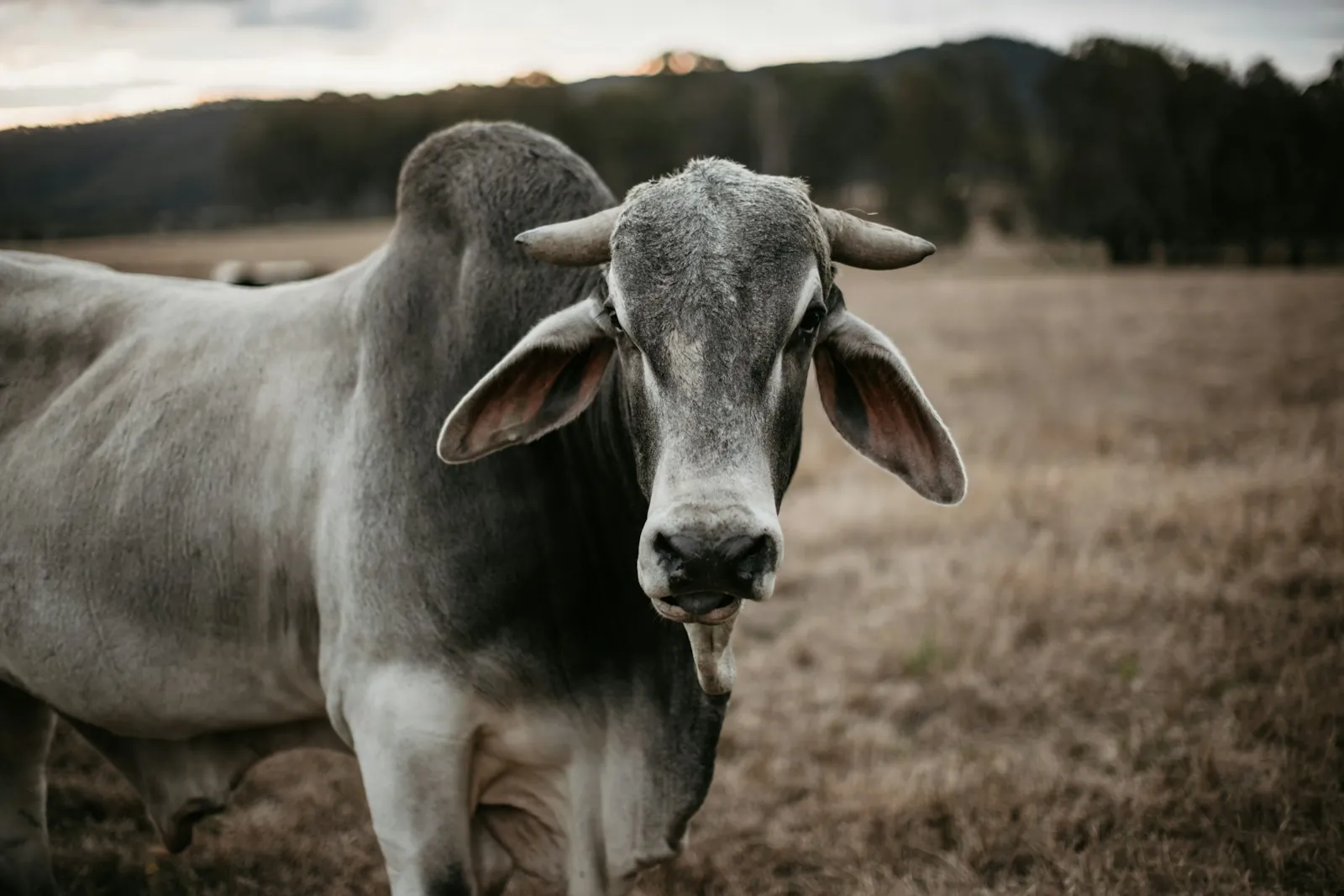
You tell a beast's age by counting its permanent incisors, the broad front teeth on the bottom jaw. Calves start with small milk teeth, and from about two years of age these are replaced by permanent teeth in pairs, from the centre outwards, until the animal is a full mouth "8 tooth". Each step is only a rough age band, because breed, nutrition and the individual animal all shift the timing by months.
Why does a cow's age matter?
Many markets have age limits, so age is a big part of trading cattle (Tyler 2011). In the AUS-MEAT language, the industry's common description system, dentition is defined as the "number of permanent erupted incisor teeth" and is treated as an indicator of age, with younger cattle giving more tender meat (FutureBeef 2011).
Age also matters for management. Cattle generally lose value as they age, and bad teeth are among the most common reasons cows are culled (Karisch 2025). A cow with broken or worn teeth may struggle to graze and hold condition (Karisch 2025). A poor mouth is one reason a single cow can slip in body condition while the rest of the mob holds.
The best record of age is a birth record. Mississippi State University Extension advises keeping birth records and passing them on when cattle change hands, so the exact age is known. Where there are no records, teeth are the fallback (Karisch 2025).
What teeth do cattle have?
Cattle have incisors at the front of the mouth on the bottom jaw only. The front of the upper jaw is a hard dental pad with no teeth (Karisch 2025). When you count teeth for age, you count the permanent teeth on the lower jaw (Tyler 2011).
A full set is eight incisors in four pairs: from the middle out, the centrals (pinchers), first intermediates, second intermediates and corners (Karisch 2025).
Milk teeth and permanent teeth
Calves are born with, or quickly grow, temporary incisors, also called milk or baby teeth. A calf typically has two or more showing at birth, and by about one month old all eight have generally appeared (Karisch 2025). These milk teeth are much smaller and whiter than permanent teeth (Karisch 2025).
From about two years of age the milk teeth are replaced by permanent teeth. The permanent teeth erupt in pairs, starting with the centre pair (Tyler 2011).
How do you count a beast's teeth?
The age is named after the number of permanent incisors. An animal with only milk teeth is a "milk tooth", one with two permanent teeth is a "2 tooth", and so on up to a full set of eight, called an "8 tooth" or "full mouth" (Tyler 2011).
A few counting rules matter:
- A tooth counts as erupted once it has broken through the gum. A pair counts as erupted when the first tooth of that pair is through (Tyler 2011).
- AUS-MEAT records animals with 1 or 2 permanent incisors as 2 tooth, and animals with 3 or 4 as 4 tooth (MLA 2021).
- So a beast with four obvious permanent teeth and two more just breaking the gum on either side is a 6 tooth (Tyler 2011).
At what age do cattle get their permanent teeth?
There is no exact answer, only ranges. MLA's cattle assessment manual says eruption age "is extremely variable and is thought to be affected by breed and nutrition" and gives an AUS-MEAT guide (MLA 2021). FutureBeef adds averages and ranges for British and Brahman cross cattle (Tyler 2011).
| Permanent incisors | AUS-MEAT guide age | British cattle: average (range) | Brahman cross: average (range) |
|---|---|---|---|
| Milk or 0 tooth | 0 to 18 months | Not given | Not given |
| 2 tooth | 18 to 30 months | 24 months (21 to 27) | 26 months (23 to 29) |
| 4 tooth | 24 to 36 months | 31 months (26 to 36) | 33 months (28 to 38) |
| 6 tooth | 30 to 42 months | 38 months (32 to 44) | 41 months (35 to 47) |
| 8 tooth (full mouth) | 36 months and over | 46 months (39 to 54) | 51 months (43 to 58) |
Read the table as overlapping bands, not fixed steps. FutureBeef points out that a beast with four permanent incisors could be as young as 26 months or as old as 38 months, and says the range in eruption age "varies enormously from beast to beast due to individuality, breed, nutrition and climatic influences" (Tyler 2011). Early maturing cattle, such as British breeds, tend to cut their teeth younger than later maturing cattle such as Brahman cross (Tyler 2011).
Despite the spread, FutureBeef still calls teeth counting "a useful way to assess cattle age" (Tyler 2011). It sorts cattle into broad groups; it will not split a 30 month beast from a 34 month one.
How do AUS-MEAT and MSA use teeth?
AUS-MEAT carcase categories are built partly on dentition. Some examples from the AUS-MEAT definitions reproduced in the MLA manual (MLA 2021):
- Yearling Beef (Y): no more than 2 permanent incisors, up to about 18 months.
- Young Beef (YG): no more than 2 permanent incisors, up to about 30 months.
- Young Prime Beef (YP): no more than 4 permanent incisors, up to about 36 months.
- Prime Beef (PR): no more than 7 permanent incisors, up to about 42 months.
- Cow (C): a female with 8 permanent incisors, any age.
The manual notes that the ages shown are an approximation only (MLA 2021).
Meat Standards Australia (MSA), the eating quality grading system, takes a different approach. MSA grading uses ossification, which is assessed on the carcase at the meatworks and cannot be used on live animals (Tyler 2011). Ossification measures physiological maturity: as an animal matures, cartilage around the bones of the backbone turns to bone, and an MSA grader scores this in the chiller on a scale from 100 to 590 (MLA 2018).
MLA explains why MSA does not rely on teeth: "Actual age is not predicted accurately by either ossification or dentition." Tooth eruption is often delayed in cattle under nutritional stress, while ossification speeds up under stress, which better reflects the lower eating quality of those carcases. (MLA 2018). So a beast's tooth count matters for AUS-MEAT categories and many market specs, but its MSA grade comes from the carcase.
How do you check cattle teeth safely?
Only look in a mouth when the head is properly restrained, because sudden head movement can cause injuries. A practical routine, based on Mississippi State University Extension advice (Karisch 2025):
- Run the beast into a crush and restrain the head in a head bail (a head catch).
- If needed, steady the head further with a halter, or a device on the head bail that turns the neck to the side. Take care with nose tongs, which can suddenly slip out.
- Open the mouth by putting one or more fingers in the corner of the mouth, behind the teeth.
- Pull the tongue to one side to hold the mouth open and lower the risk of being bitten.
- Count the broad permanent incisors on the bottom jaw. With practice this is quick, which shortens how long the beast is held.
Can you tell an old cow's age from its teeth?
Only roughly. Ageing cattle up to five years by eruption is more accurate than ageing older cattle by tooth wear (Karisch 2025). Once the corners are through, you are reading wear, not eruption.
As a general guide from Mississippi State University Extension, the centre incisors are levelled by five to six years, and the corners level at about nine years (Karisch 2025). As teeth wear they narrow at the base and gaps open between them. A "short mouth" animal has teeth worn noticeably shorter but not yet to the gum line, cattle with broken or missing teeth are called "broken mouth", and a beast with all incisors gone or worn smooth to the gums is "smooth mouth" (Karisch 2025).
Wear rates vary with diet and genetics. Coarse or gritty feed wears teeth faster, crossbred cattle often keep their incisors longer than straightbreds, and Brahman cross cattle usually keep them longer than crossbreds with only British or Continental breeding (Karisch 2025).
Can a photo tell you a cow's age?
Not reliably. A photo of the side of an animal cannot show its teeth. CattleScale reports an approximate age in months from a side on photo, along with live weight, body condition, muscle and frame score. That age figure is a rough visual estimate, nothing more. It does not replace mouthing or birth records.
For the other readings, see frame score and muscle score and how to estimate cattle weight without scales.
Where does CattleScale fit?
CattleScale estimates live weight from a side on photo, with a range and a Low, Moderate or Good confidence rating. It also reports body condition (1 to 9), an AUS-MEAT muscle score, a frame score, an approximate age and an indicative value from MLA indicators.
Be clear about its limits. In our first test on 70 cattle weighed on scales the typical weight error was about 23 per cent, and the true weight fell inside the range about four times in ten. A newer model, re-run on all 72 of those cattle in October 2026, did no better at about 23 per cent, so without a measured scale the app now shows a wider range, from 25 per cent under its estimate to 50 per cent over, which held the true weight about eight times in ten on that test. The full figures are on our accuracy questions. It is an estimate, not a weigh scale: do not dose, buy or sell on it. For age, the answer is the same. When age decides a market category or a price, open the mouth or check the records.
Frequently asked questions
How old is a 2 tooth cow?
Usually 18 to 30 months on the AUS-MEAT guide. FutureBeef gives an average eruption age of 24 months for British cattle (range 21 to 27) and 26 months for Brahman cross (range 23 to 29). Breed, nutrition and the individual animal all shift this.
What does "full mouth" mean in cattle?
A full mouth or 8 tooth animal has all eight permanent incisors. The AUS-MEAT guide puts this at 36 months or more, and FutureBeef gives average eruption ages of 46 months for British cattle and 51 months for Brahman cross.
Do cattle have top front teeth?
No. Cattle have incisors on the bottom jaw only. The front of the top jaw is a hard dental pad, so you count the permanent teeth on the lower jaw.
Does MSA grading use teeth to age cattle?
No. MSA uses ossification, a measure of bone maturity scored on the carcase in the chiller from 100 to 590. MLA notes that neither ossification nor dentition predicts actual age accurately, and that tooth eruption is often delayed in cattle under nutritional stress.
Can the CattleScale app tell a cow's age?
It gives an approximate age in months from a side on photo, but a photo cannot see teeth. Treat it as a rough visual estimate. Counting permanent incisors, or birth records, is the reliable way.
References
- FutureBeef (2011) 'The AUS-MEAT language', FutureBeef. Reviewed 7 January 2025. Available at: https://futurebeef.com.au/resources/the-aus-meat-language/ (Accessed: 4 October 2026).
- Karisch, B. (2025) Estimating cattle age using dentition, Publication 2779. Mississippi State University Extension Service. Available at: https://extension.msstate.edu/sites/default/files/2025-08/P2779_web.pdf (Accessed: 4 October 2026).
- Meat & Livestock Australia (2018) 'MSA tips and tools: Ossification and beef eating quality', Meat & Livestock Australia. Available at: https://www.mla.com.au/globalassets/mla-corporate/marketing-beef-and-lamb/documents/meat-standards-australia/msa06-beef-tt_ossification-and-beef-eating-quality-lr.pdf (Accessed: 4 October 2026).
- Meat & Livestock Australia (2021) Cattle assessment manual, Market Information Services, July 2021. Meat & Livestock Australia. Available at: https://www.mla.com.au/globalassets/mla-corporate/extensions-training-and-tools/documents/assessmentmanual-cattle.pdf (Accessed: 4 October 2026).
- Tyler, R. (2011) 'Ageing cattle by their teeth', FutureBeef. Reviewed 13 May 2022. Available at: https://futurebeef.com.au/resources/ageing-cattle-by-their-teeth/ (Accessed: 4 October 2026).